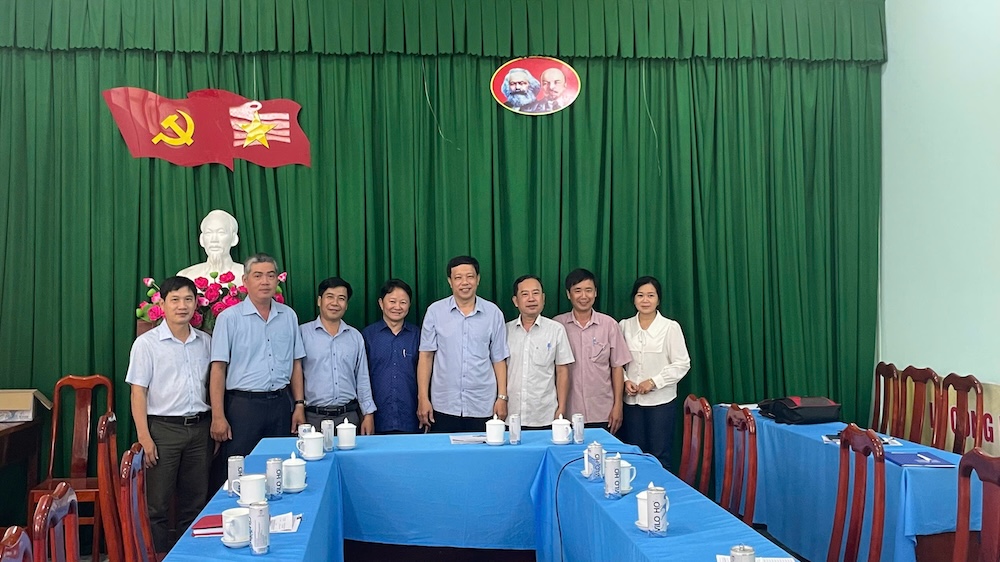
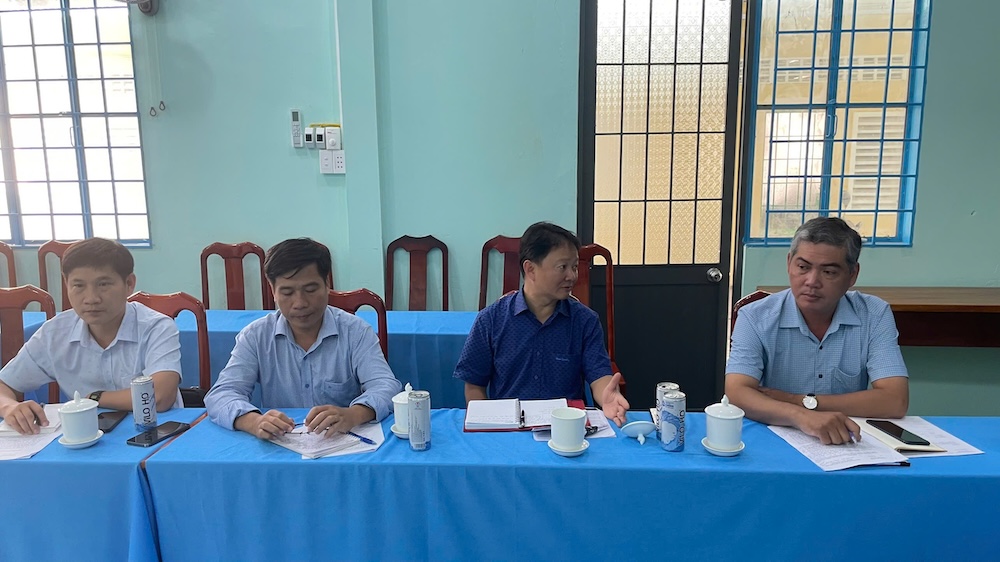
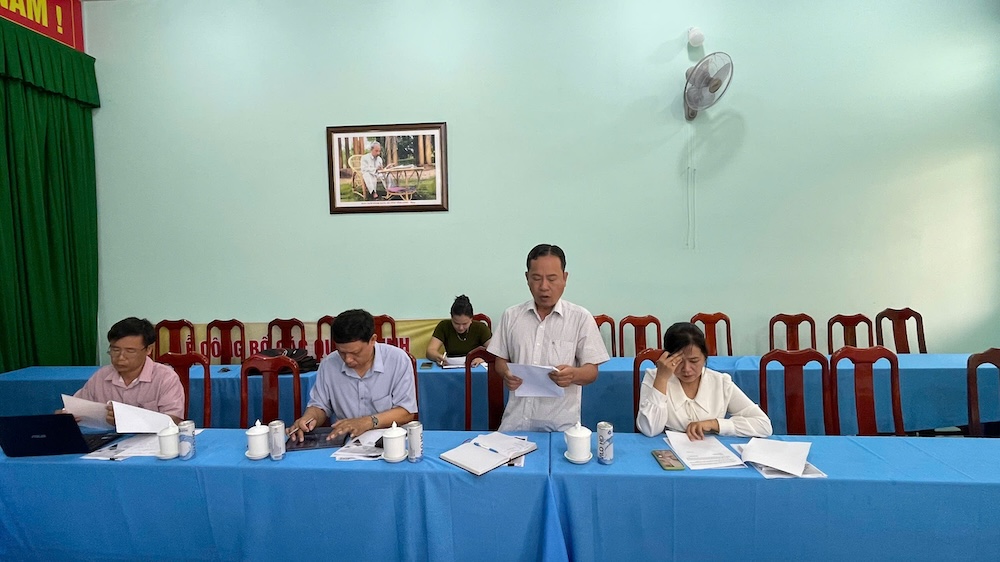
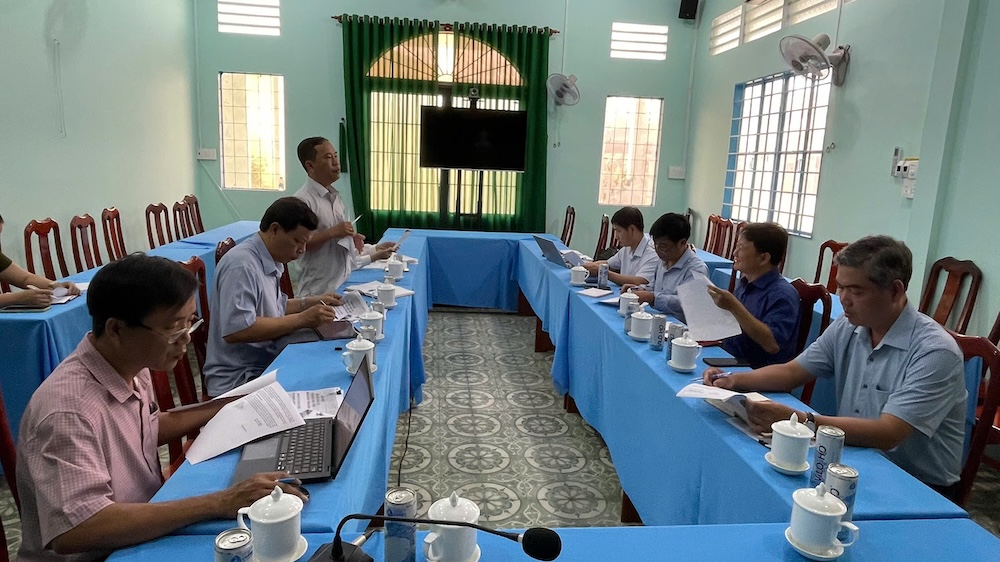
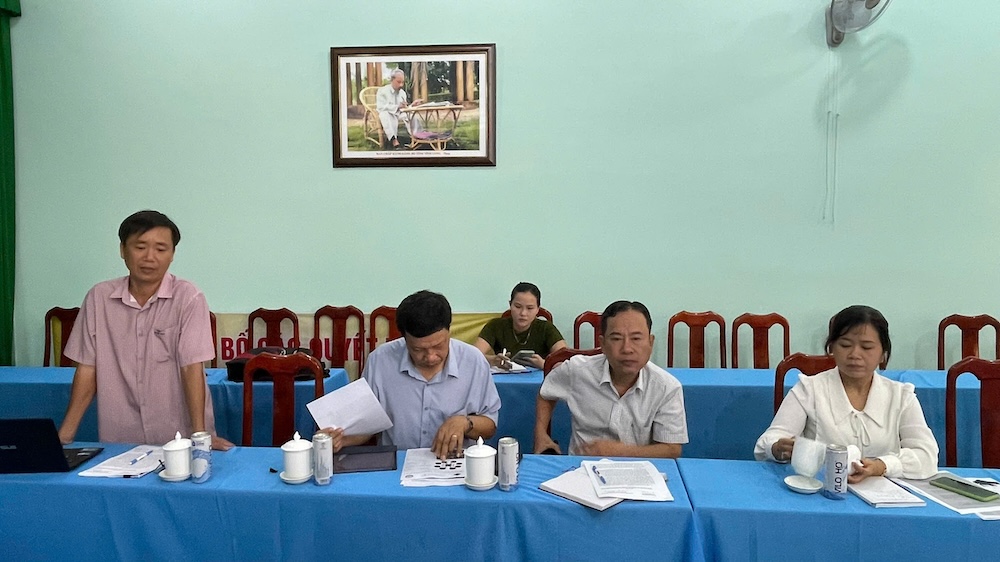
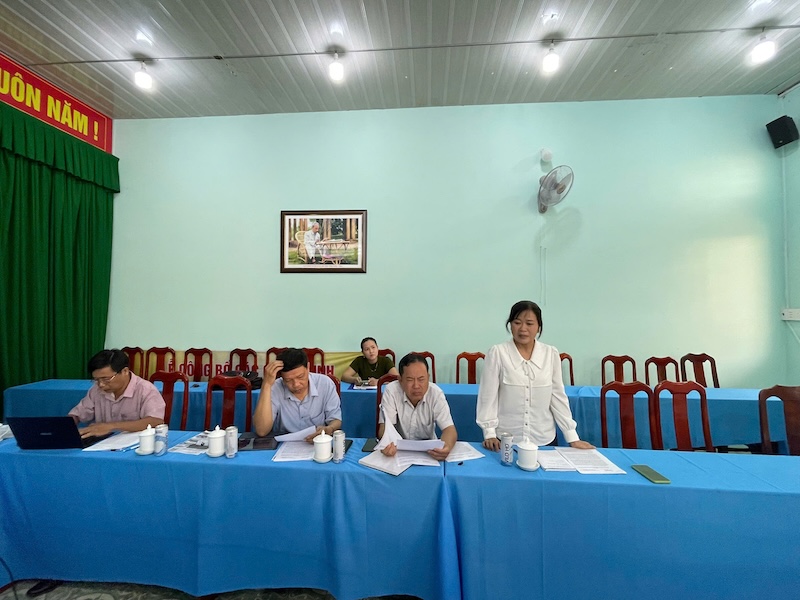
On the morning of November 1, 2025, the delegation from the Mekong Institute, Can Tho University had a working session with the leadership of the Department of Science and Technology of Vinh Long Province and the People’s Committee of Hieu Thanh Commune to discuss the orientation for developing smart and circular agriculture adaptive to climate change and applying technological solutions to enhance the added value of local products.
Participants included:
From the Mekong Institute, Can Tho University:
Assoc. Prof. Dr. Van Pham Dang Tri – Director, Mekong Institute – Head of Delegation;
Dr. Vo Van Tuan – Deputy Director, Mekong Institute;
Dr. Nguyen Thanh Tam – Director, Production Ecosystem Program;
MSc. Nguyen Tan Loi – Researcher, Production Ecosystem Program.
From the Department of Science and Technology:
Mr. Tran Van Ut Tam – Deputy Director of the Department of Science and Technology of Vinh Long Province.
From the local authorities:
Mr. Nguyen Van Phuoc Thien – Secretary of the Commune Party Committee – Chairman of the People’s Council;
Mr. Nguyen Thanh Son – Vice Chairman of the Commune People’s Committee;
Ms. Le Ngoc Yen – Head of the Economic Division;
Mr. Le Van Tham – Chairman of the Vietnam Fatherland Front Committee of the Commune.
During the meeting, all parties expressed deep interest in the sustainable agricultural development of the locality. Particularly, Hieu Thanh Commune proactively proposed orientations for scientific research and technological application to the Department of Science and Technology, aiming to promote socio-economic development and ensure sustainable livelihoods for local residents.
Local representatives reported on the actual conditions and challenges in agricultural production, such as localized flooding, lack of regional linkages, low certification rates for products, and the need to study appropriate crop transitions. The commune also proposed priority directions, including land evaluation, development of citrus, coconut, and sweet thanh tra pomelo, as well as strengthening business linkages and enhancing product value chains.
The Mekong Institute provided several discussions and proposals focusing on:
Supporting the transfer of science and technology to develop promising and exemplary production models in the locality;
Promoting the implementation of circular agricultural models suitable for the socio-economic conditions of each region;
Developing and standardizing raw material zones to meet certification and export standards for key agricultural products such as coconut, orange, and cacao;
Enhancing the branding and value chain of local specialty products;
Building capacity for local staff through training courses and educational programs.
From the local side, specific cooperation proposals with the Mekong Institute included:
Developing circular economic models such as the integrated garden–pond–livestock system, combining crops like coconut–fish/snail–cacao or tangerine;
Supporting technical training and infrastructure investment, including guidance on the use of bio-fertilizers, organic fertilizers, and proper dike system planning;
Developing a coconut–lingzhi mushroom integrated model to improve land use efficiency and economic value;
Establishing a model for collecting and utilizing water hyacinth to produce organic fertilizer, moving toward organic certification and sustainable market expansion.
Based on these discussions, representatives of the Department of Science and Technology shared insights related to research and technology transfer at the local level, as well as the mechanisms for proposing and implementing scientific and technological tasks in the province. The Department also invited the Mekong Institute to contribute ideas to the framework of the forthcoming cooperation program between the Department of Science and Technology and Can Tho University.
Finally, the parties agreed on key directions for future cooperation between the Mekong Institute and local authorities, including support for scientific research and technology transfer, capacity building for local officers through training programs, and strengthening skills in management, public policy, and rural development.
The working session concluded at 10:30 a.m. on the same day, opening up long-term cooperation prospects between the Mekong Institute – Can Tho University and Hieu Thanh Commune, toward sustainable agriculture and circular economy development in Vinh Long Province.
#MekongInstitute #CanThoUniversity #HieuThanhCommune #LocalCooperation #SustainableDevelopment #CircularEconomy #AgroInnovation