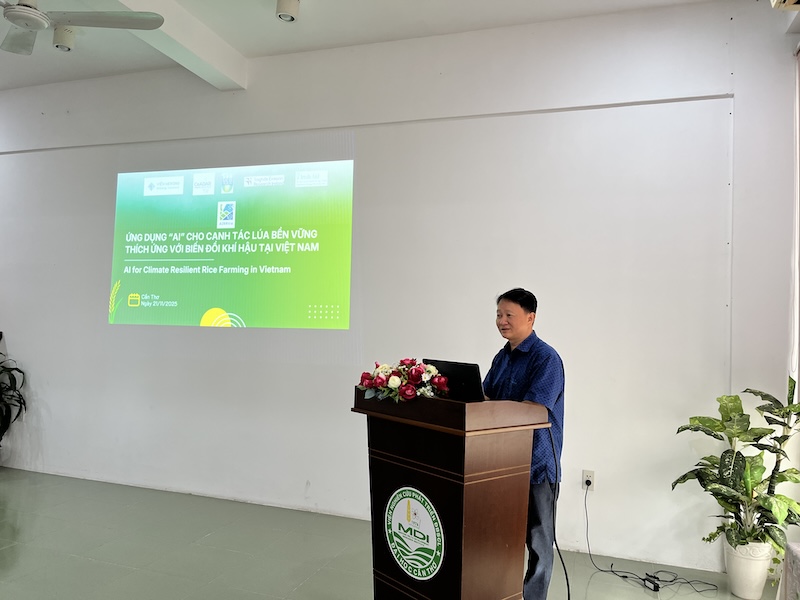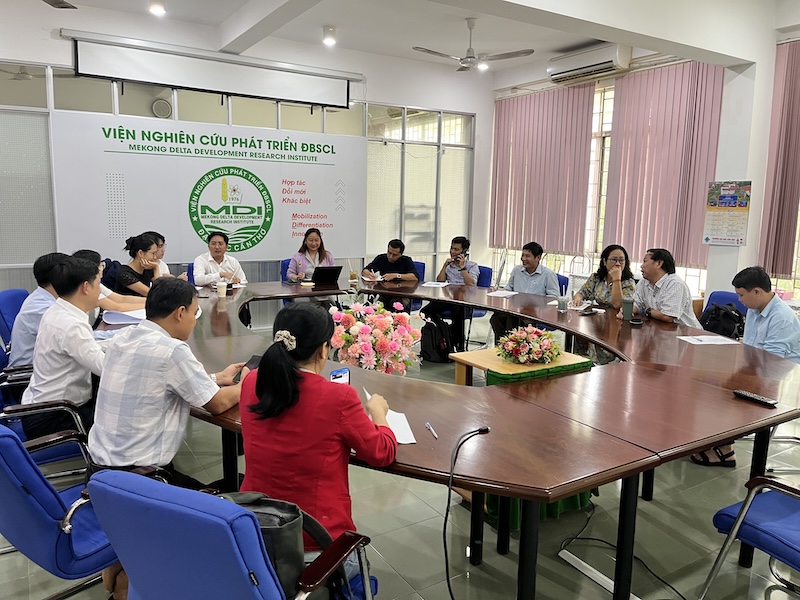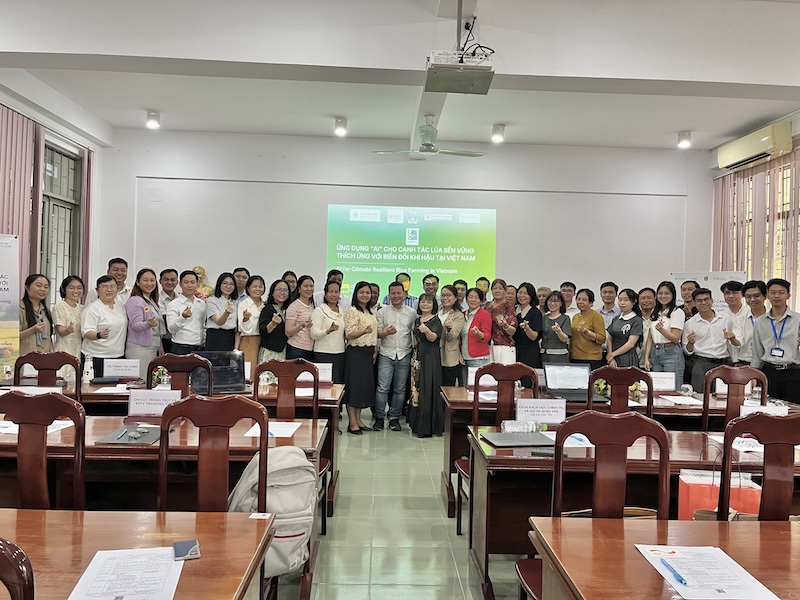
Can Tho, November 21, 2025 – The Mekong Institute (Mekong Institute – CTU), Can Tho University, in collaboration with Dublin City University, Ireland, successfully organized a Thematic Consultation Meeting on “Applying AI to Support Sustainable Rice Cultivation Adapted to Climate Change in Vietnam.” The event aimed to introduce and gather expert feedback on the design and implementation of an AI assistant - a high-tech solution intended to enhance adaptive capacity and sustainability in rice production in the Mekong Delta.
In his opening remarks, Assoc. Prof. Dr. Van Pham Dang Tri, Director of the Mekong Institute, emphasized the importance of integrating advanced technologies such as AI into agriculture to effectively address the increasing challenges posed by climate change.
Key research and development topics discussed during the consultation meeting included:
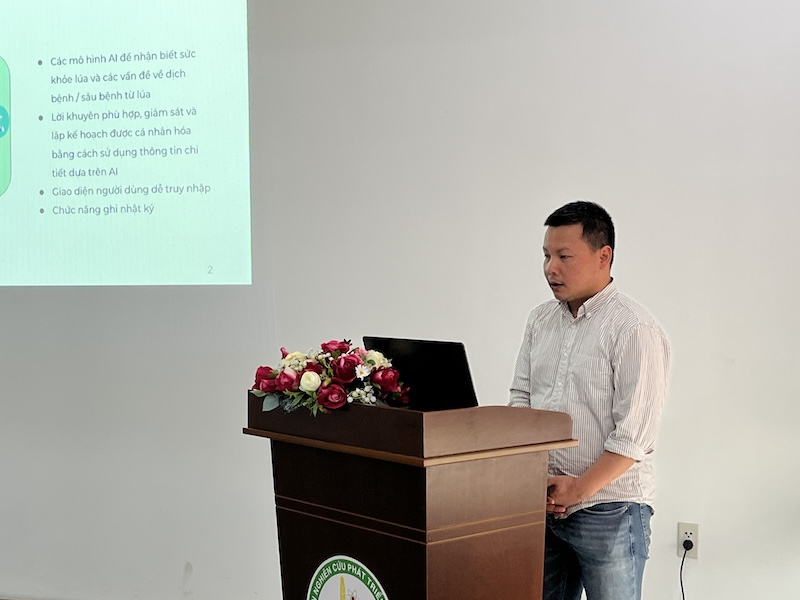
• Introduction to the AIRRVie Project and AI Demo:
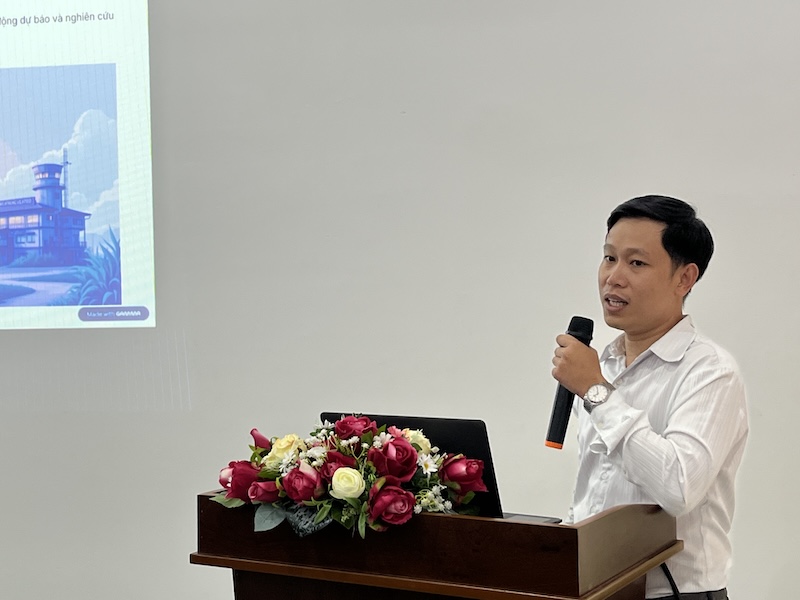
Presented by Dr. Le Quan from Dublin City University, Ireland. The presentation provided an overview of the project (objectives, partners, plans) and showcased a demo of the AI assistant designed specifically for rice cultivation. Participants had the opportunity to test and practice using the demo on their mobile phones.
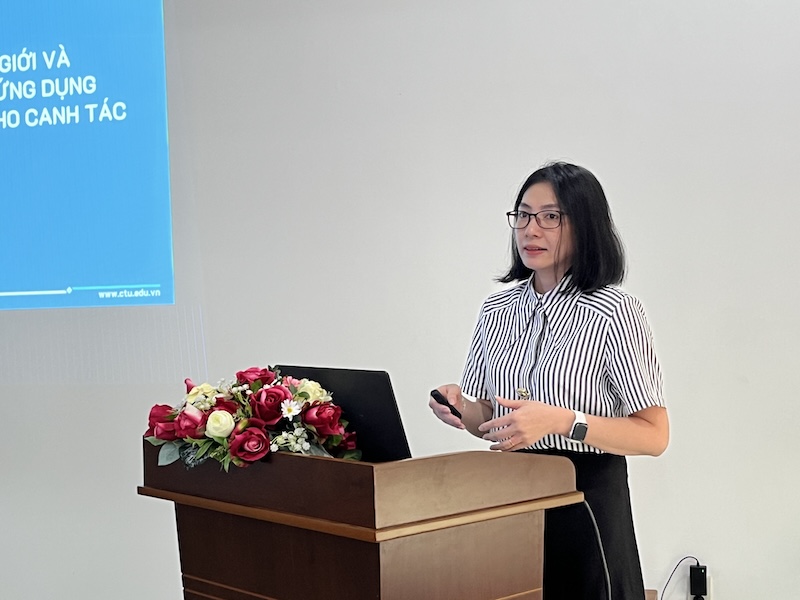
• Social - Gender Analysis and Vulnerable Groups:
Presented by Ms. Chau My Duyen from the Faculty of Political Science and Social Sciences & Humanities, Can Tho University. The study highlighted survey results concerning gender issues and vulnerable groups in adopting the AI assistant - an important factor ensuring inclusiveness and equity in accessing new technologies.
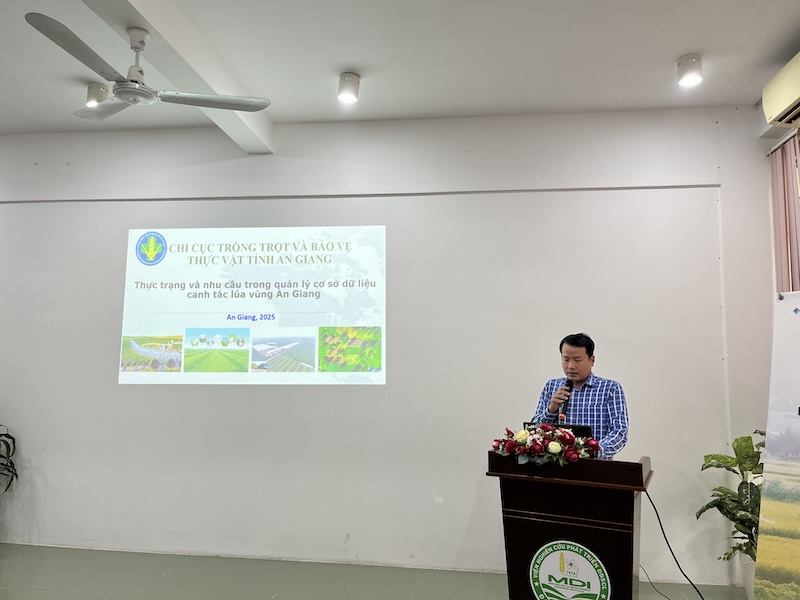
• Database Management and Collaboration:
Representatives from state management agencies contributed insights. Mr. Huynh Chi Linh from the Plant Protection and Crop Production Branch of An Giang Province discussed the current situation and needs regarding rice cultivation database management in An Giang. Mr. Phan Hai Duong from the Can Tho Hydro-Meteorological Station presented on the role of databases and the potential for information-sharing cooperation to support climate change adaptation in sustainable rice cultivation.
• In-Depth Discussion: From Theory to Practice
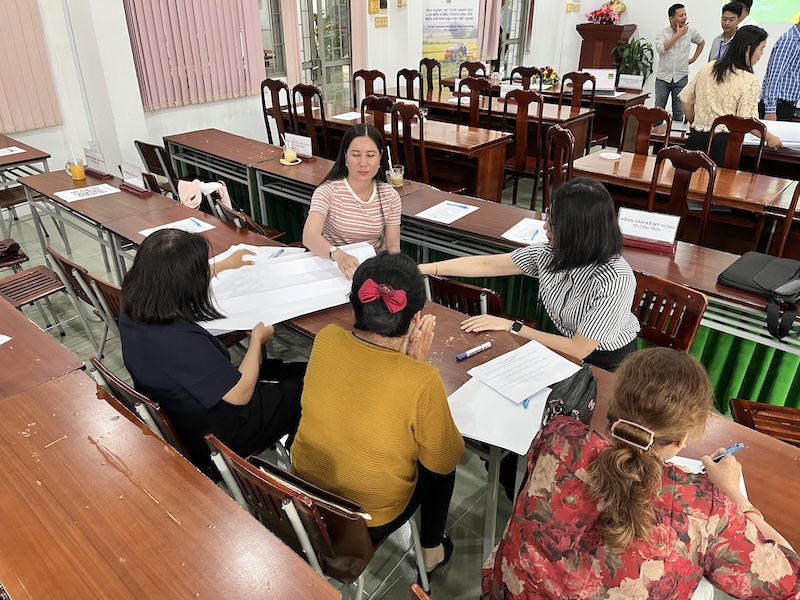
The discussion session was organized into groups of experts, local officials, and farmers (both men and women). The goal was to gather diverse feedback, validate the AI assistant’s design features, and identify practical requirements to optimize the tool before wider deployment. The consultation meeting achieved important outcomes in identifying the technical and social requirements needed to refine the AI assistant, ensuring that the tool is not only scientifically and technically effective but also accessible and suitable for different user groups - particularly women and vulnerable groups within agricultural communities.