In order to open up new pathways for climate-resilient livelihood development, identifying flexible production models that effectively utilize local resources has become increasingly essential. Women members of the Hoa De Aquaculture Cooperative (Hoa Tu Commune, Can Tho City) are gradually accessing a new livelihood option: cultivating vegetables on shrimp pond dikes.
On January 31, 2026, the Mekong Institute of Can Tho University, in collaboration with the Center for Women’s Development in the Mekong Delta and the People’s Committee of Hoa Tu Commune, continued to implement the training program “Guidelines for Growing Vegetables on Shrimp Pond Dikes” for the Hoa De Cooperative community. This activity was conducted within the framework of the project “Empowering Climate-Resilient Women – Transforming Livelihoods through Indigenous Resources (WILA)” (WILA), funded by the Embassy of Canada through the Canada Fund for Local Initiatives (CFLI).
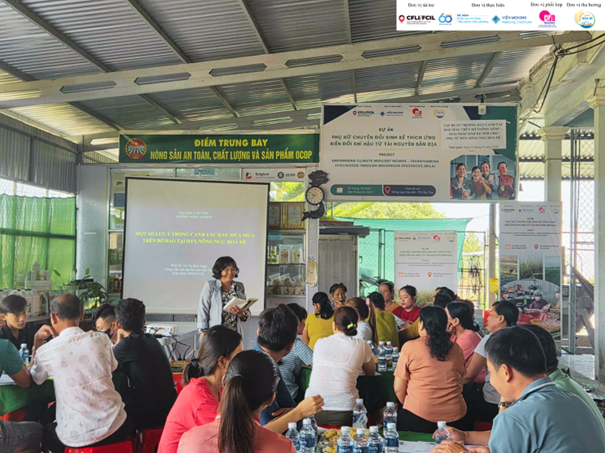
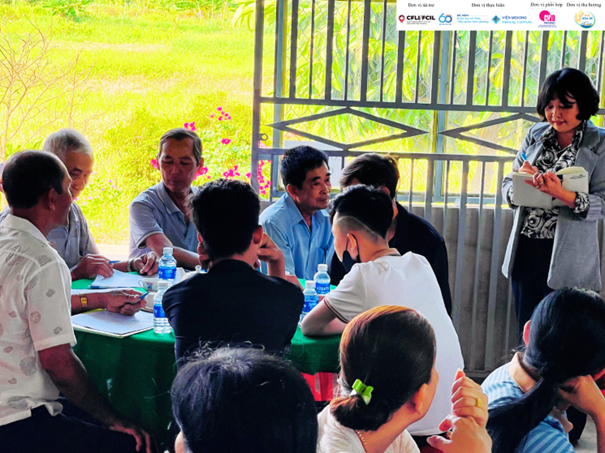
The training was directly facilitated by Assoc. Prof. Dr. Vo Thi Bich Thuy, Senior Lecturer at the Faculty of Crop Sciences, College of Agriculture, Can Tho University. The training content focused on introducing vegetable varieties suitable for local soil and water conditions in Hoa Tu Commune; techniques for improving shrimp pond dike soil; seed selection; crop scheduling; and crop care under conditions of freshwater scarcity. The workshop attracted approximately 40 participants, including members of the Hoa De Aquaculture Cooperative, representatives of the Women’s Union, Farmers’ Association, Youth Union, Hoa Tu Commune People’s Committee, and students from Can Tho University.
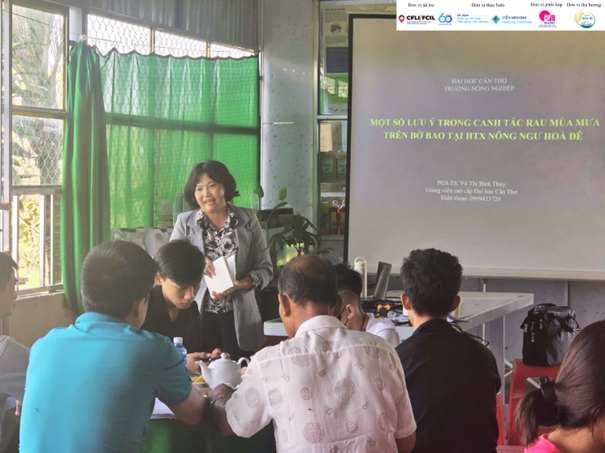
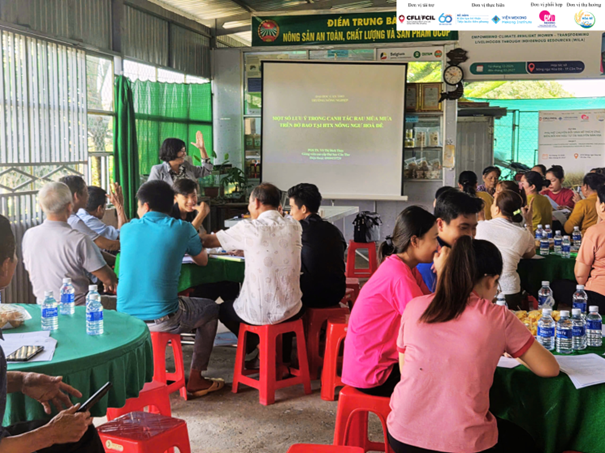
Through the training, cooperative members were equipped with additional knowledge and practical skills in new cultivation methods, contributing to income diversification, reducing risks associated with dependence on a single livelihood source, and enhancing the role and capacity of women in climate-resilient livelihood transformation. The vegetable cultivation model on shrimp pond dikes not only helps utilize unused land areas but also generates short-term income, reducing reliance on a single livelihood activity. More importantly, it represents a strategic step in strengthening women’s production capacity, increasing their autonomy, and gradually affirming their central role in climate change adaptation and sustainable livelihood transformation.
The WILA project aims to promote community-based climate-resilient livelihoods, thereby contributing to the achievement of the Sustainable Development Goals (SDGs) in the Mekong Delta region, including: Zero Hunger (Goal 2: 2.3, 2.4); Quality Education (Goal 4: 4.5, 4.7); Gender Equality (Goal 5: 5.5, 5.7); Clean Water and Sanitation (Goal 6: 6.3, 6.b); Decent Work and Economic Growth (Goal 8: 8.2, 8.3, 8.4); Industry, Innovation and Infrastructure (Goal 9: 9.3); Reduced Inequalities (Goal 10: 10.2, 10.3); Responsible Consumption and Production (Goal 12: 12.1, 12.2, 12.3, 12.5, 12.6, 12.8, 12.a); Climate Action (Goal 13: 13.1, 13.3); and Life Below Water (Goal 14: 14.1).
#CFLI and #CLFIVietnam #ViệnMekong #CTU #CWD
#WILA #PhụNữChuyểnĐổiSinhKế #SinhKếBềnVững