Continuing to accompany coastal communities on their journey toward climate change adaptation, on February 1, 2026, at the Hoa De Aquaculture Cooperative in Hoa Tu Commune, a training workshop entitled “Building Climate Resilience in Livelihoods and Daily Life” was organized under the project “Empowering Climate-Resilient Women – Transforming Livelihoods through Indigenous Resources (WILA)” (WILA). The project is funded by the Embassy of Canada through the Canada Fund for Local Initiatives (CFLI).
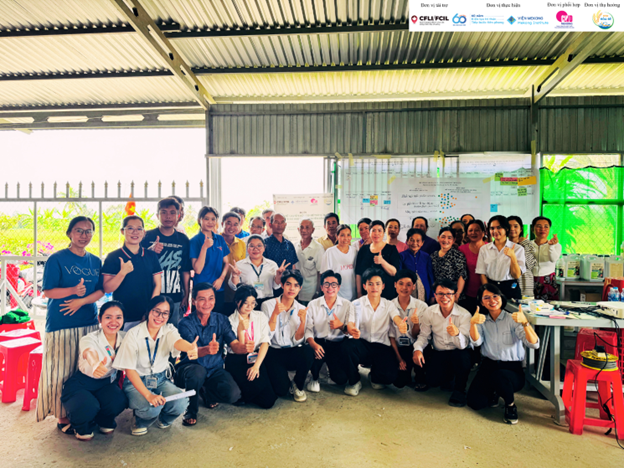
The activity was jointly implemented by the Mekong Institute of Can Tho University, the Center for Women’s Development in the Mekong Delta, and the People’s Committee of Hoa Tu Commune. The training was directly facilitated by Dr. Le Tran Thanh Liem, Lecturer at the Faculty of Environment and Natural Resources, Can Tho University. The training aimed to raise awareness, strengthen foundational knowledge, and enhance the capacity of local people, with the goal of building climate resilience in community livelihoods and daily life. The training program attracted 40 participants, including members of the Hoa De Aquaculture Cooperative, representatives of the Women’s Union, Farmers’ Association, Youth Union, the People’s Committee of Hoa Tu Commune, and students from Can Tho University.
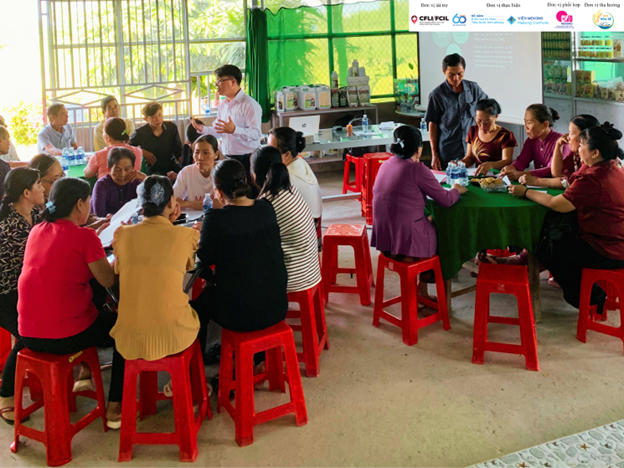
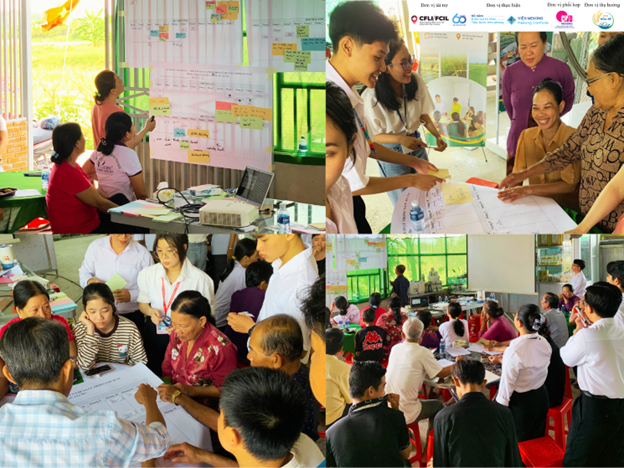
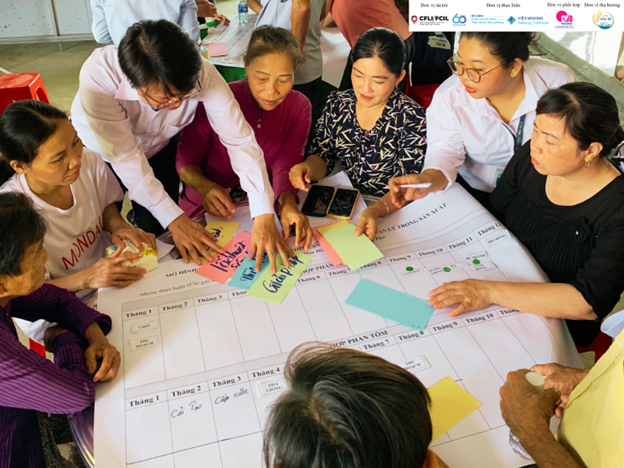
The training content focused on analyzing typical climate-related risks such as saline intrusion, seasonal salinity fluctuations, abnormal flooding, and drought. Through this process, participants were encouraged to reassess their existing livelihood models from the perspectives of resilience and adaptation, rather than merely responding passively to climate hazards. The program also included dedicated discussion sessions on developing pilot and experimental models, serving as a foundation for the development of sustainable livelihood models within the framework of the WILA project. At the conclusion of the training, participants reached a shared understanding of the central role of the community—particularly women—in the process of climate-resilient livelihood transformation, contributing to enhanced capacity and more proactive participation of local people in strengthening resilience in both livelihoods and daily life.
The WILA project aims to promote community-based climate-resilient livelihoods, thereby contributing to the achievement of the Sustainable Development Goals (SDGs) in the Mekong Delta region, including: Zero Hunger (Goal 2: 2.3, 2.4); Quality Education (Goal 4: 4.5, 4.7); Gender Equality (Goal 5: 5.5, 5.7); Clean Water and Sanitation (Goal 6: 6.3, 6.b); Decent Work and Economic Growth (Goal 8: 8.2, 8.3, 8.4); Industry, Innovation and Infrastructure (Goal 9: 9.3); Reduced Inequalities (Goal 10: 10.2, 10.3); Responsible Consumption and Production (Goal 12: 12.1, 12.2, 12.3, 12.5, 12.6, 12.8, 12.a); Climate Action (Goal 13: 13.1, 13.3); and Life Below Water (Goal 14: 14.1).
#CFLI and #CLFIVietnam #ViệnMekong #CTU #CWD
#WILA #PhụNữChuyểnĐổiSinhKế #SinhKếBềnVững