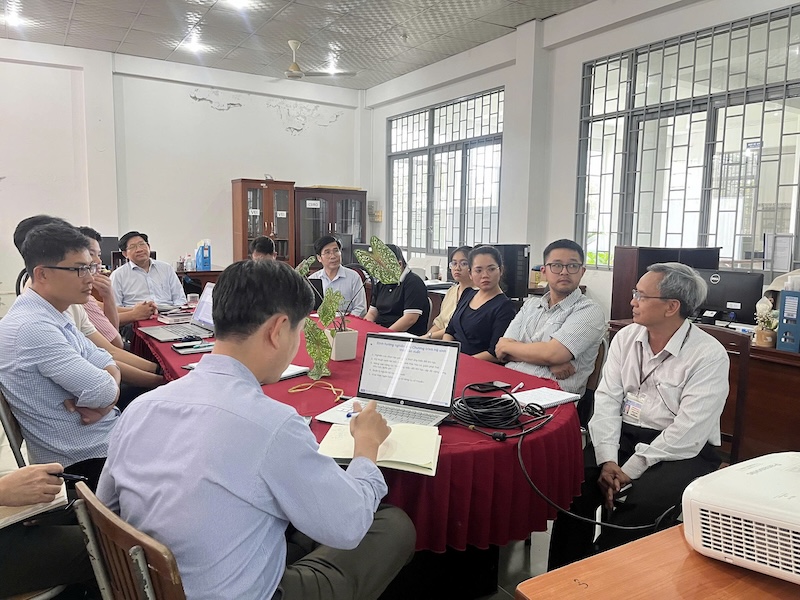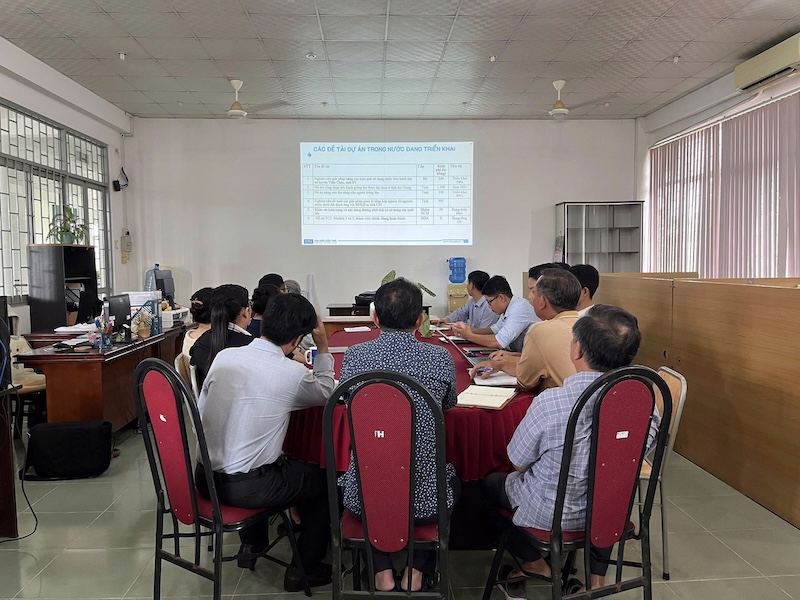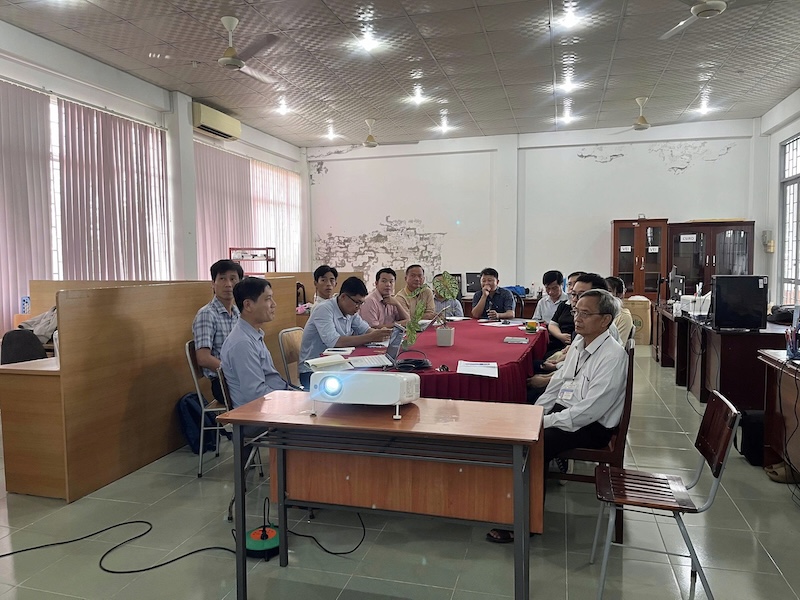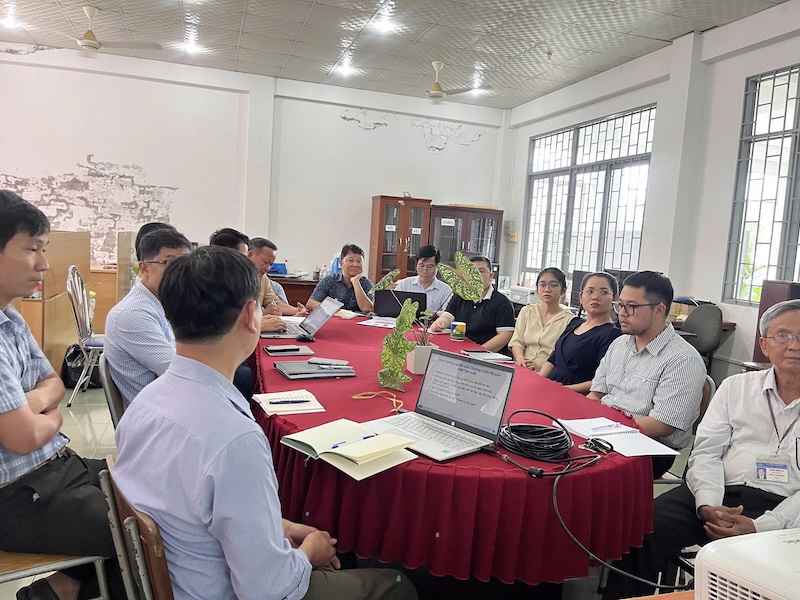
On September 16, 2025, the Production Ecosystem Program held its first meeting since its establishment, marking an important starting point in implementing the joint action plan and research orientation. The meeting was conducted in alignment with Resolution No. 234-NQ/ĐU of the Party Committee of Can Tho University on the implementation of Resolution No. 57-NQ/TW of the Politburo, aiming for breakthroughs in the development of science and technology, innovation, and national digital transformation.
The meeting was attended by all members of the Program, with the presence of Assoc. Prof. Dr. Nguyễn Hiếu Trung – Vice Rector of Can Tho University, Assoc. Prof. Dr. Văn Phạm Đăng Trí – Director, and Dr. Võ Văn Tuấn – Vice Director of the Mekong Institute. The meeting was chaired by Dr. Nguyễn Thành Tâm – Director of the Program.
The Production Ecosystem Program brings together an experienced interdisciplinary research team consisting of 3 Associate Professors, 5 PhDs, 3 Masters, and 3 Bachelors/Engineers from various fields, currently implementing numerous projects related to agriculture, sustainable development, and climate change adaptation. In its initial phase, the Program has identified four key research orientations:
1. Breeding and developing rice varieties adapted to climate change and market demands;
2. Applying sustainable, ecological, organic, and low-emission farming techniques;
3. Enhancing climate change adaptation capacity from the community to the national level;
4. Efficient management and use of resources.
At the meeting, members agreed to strengthen the development of research proposals at various levels (University, Provincial, Ministerial) as well as for prestigious funding sources such as the National Foundation for Science and Technology Development (NAFOSTED) and the Vingroup Innovation Foundation (VinIF). At the same time, the Program will expand international cooperation and foster business engagement to increase opportunities and diversify research activities. In addition, publishing scientific works, registering plant variety protection, patents, and intellectual property rights were also identified as core tasks, contributing to affirming the Program’s position and practical value.