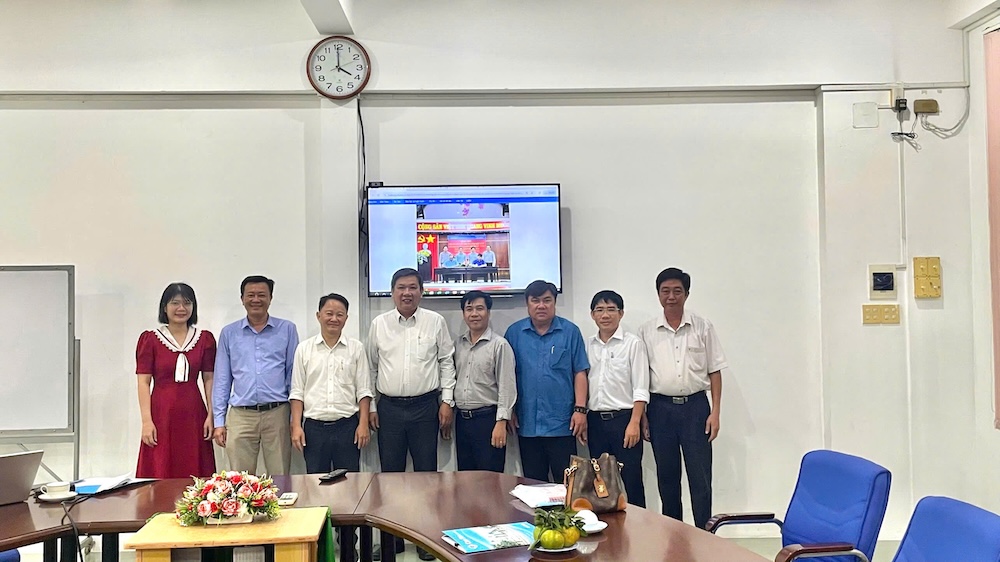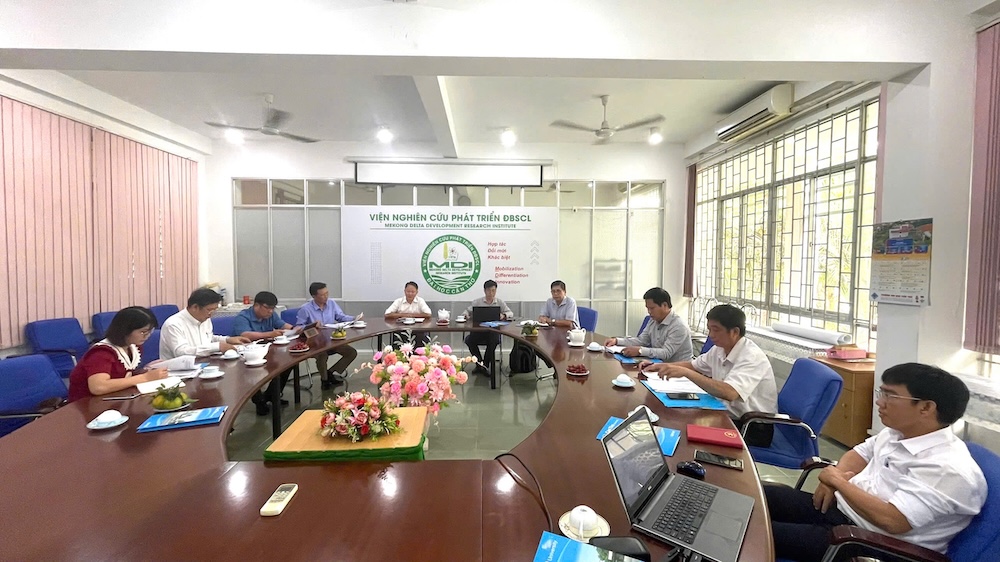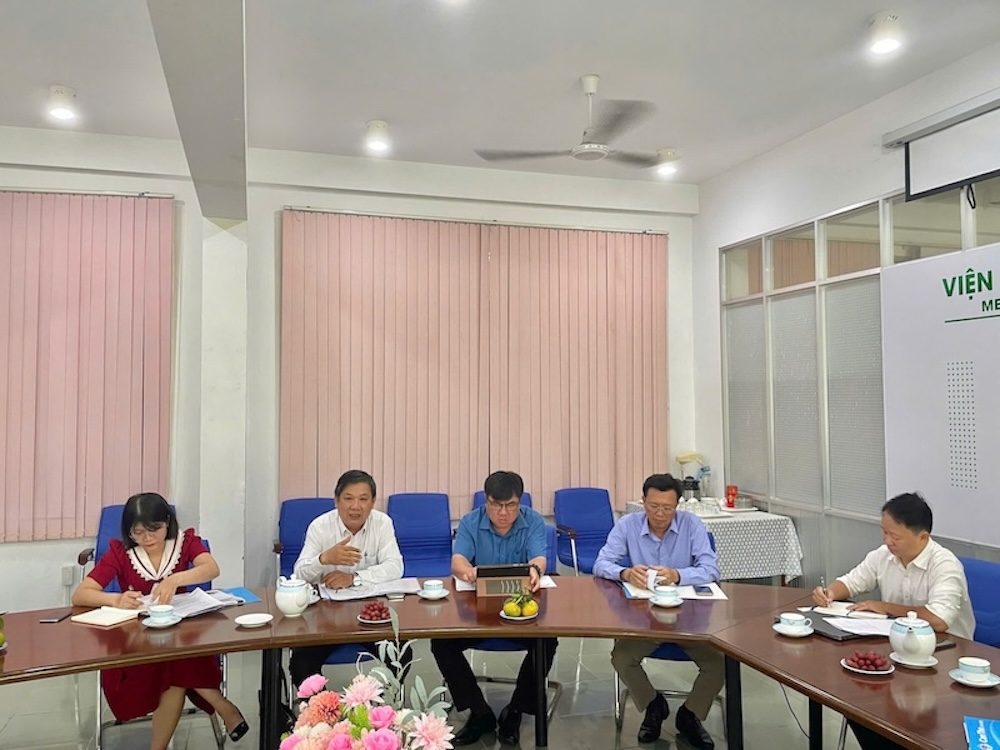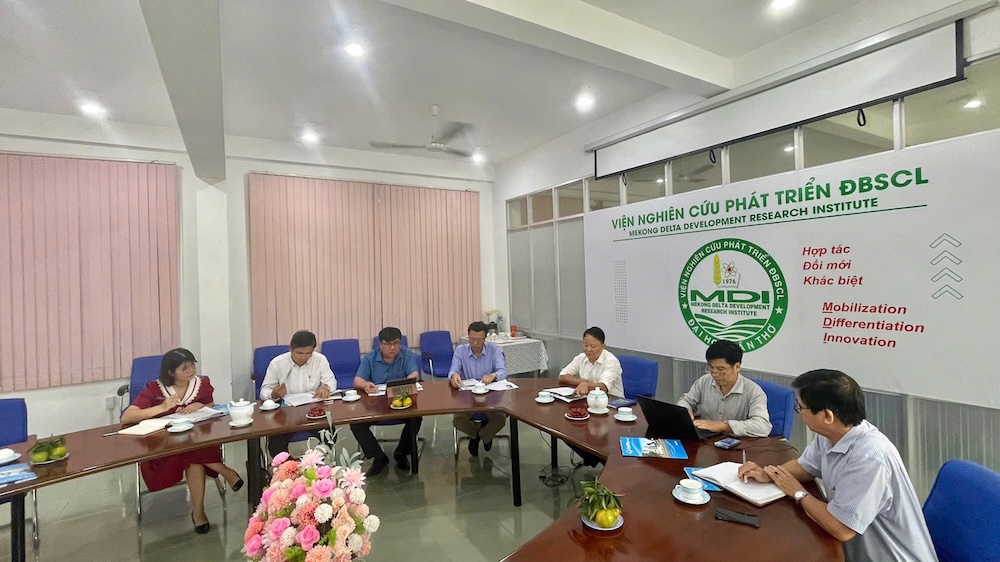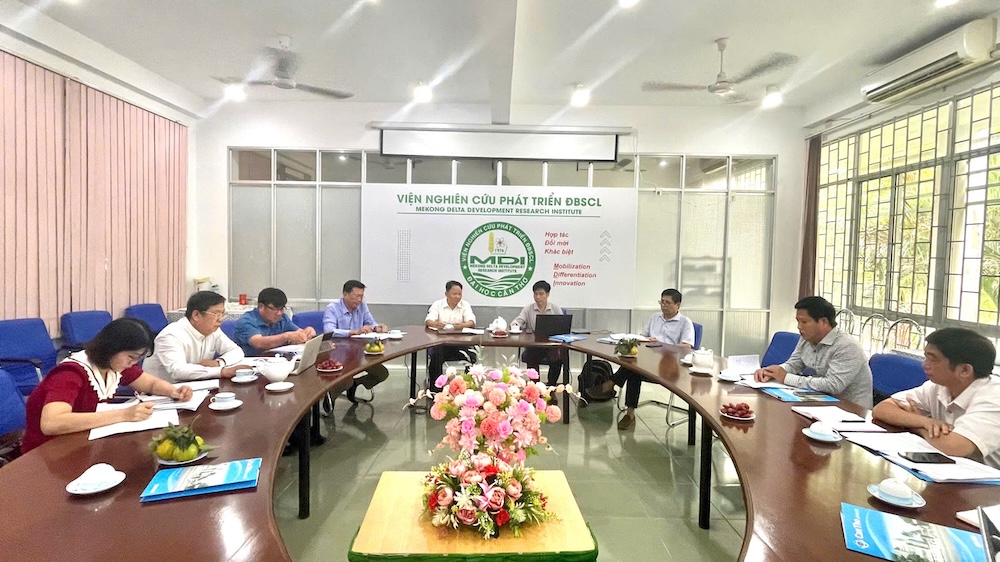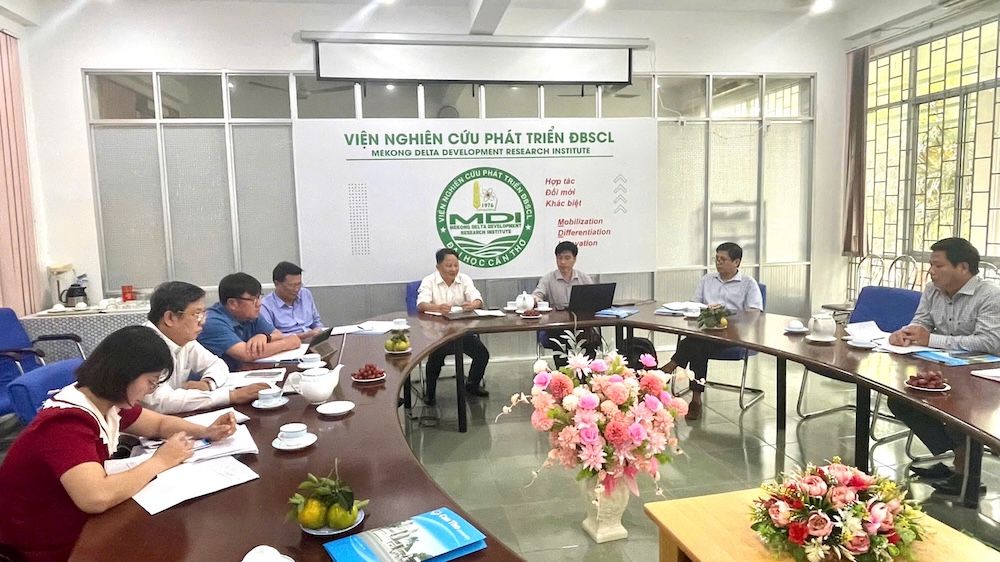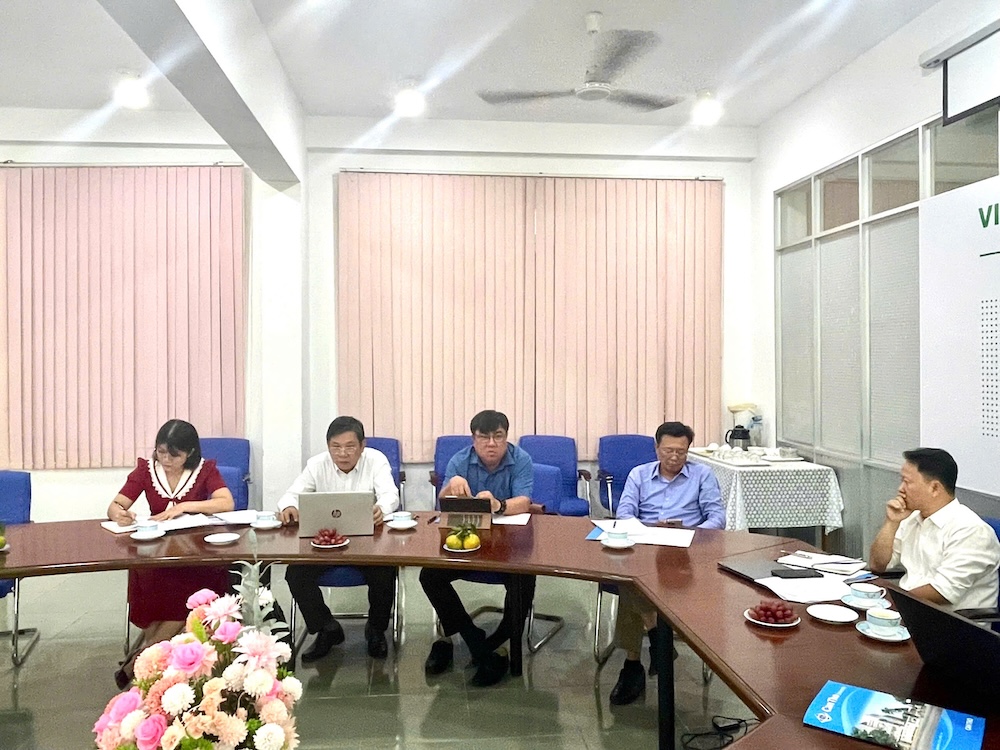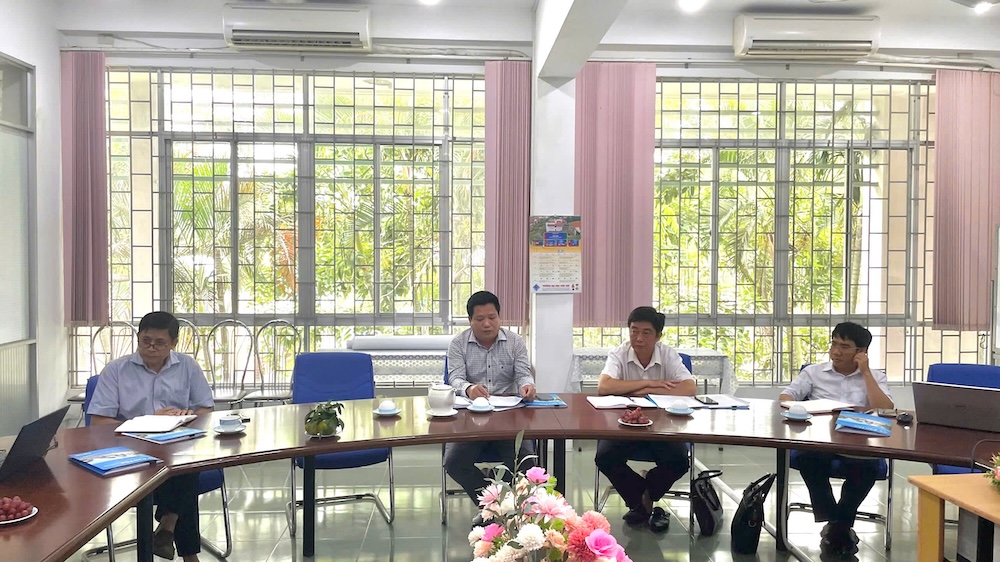
On the afternoon of November 5th, 2025, at Hall 2 – Mekong Institute, Can Tho University, a seminar and working session took place between the Mekong Institute, Can Tho University, the Department of Home Affairs, the Department of Science and Technology of Can Tho City, and leaders from several communes and wards.
The objective of the meeting was to exchange ideas on the coordination mechanism among the Departments – Mekong Institute – and commune-level authorities in human resource development, staff training, and the application of science and technology to support local development.
Participants included:
From the Mekong Institute – Can Tho University:
- Assoc. Prof. Dr. Van Pham Dang Tri – Director
- Dr. Vo Van Tuan – Deputy Director
- Assoc. Prof. Dr. Le Canh Dung – Former Senior Lecturer
- MSc. Nguyen Tan Loi – Researcher
From the Department of Home Affairs of Can Tho City:
- Ms. Nguyen Thi My Tho – Officer, Division of Civil Servants and Public Employees
From the Department of Science and Technology of Can Tho City:
- Mr. Pham Truong Giang – Deputy Director
From local authorities:
- Mr. Nguyen Van Su – Vice Chairman, People’s Committee of Cu Lao Dung Commune
- Mr. Nguyen Minh Tri – Vice Chairman, People’s Committee of My Tu Commune
- Mr. Dao Van Ky – Vice Chairman, People’s Committee of Ke Sach Commune
- Mr. Nguyen Anh Huy – Director, Political Center of Ke Sach Commune
- Mr. Thanh Hao – Head, Economic Division of Ke Sach Commune
During the session, the participants engaged in in-depth discussions on practical issues and challenges in agricultural production, associated with the goal of promoting sustainable socio-economic development in the future. The discussion also helped clarify the mechanisms of cooperation among the parties, toward shaping and developing research proposals that effectively and practically support local development.
Main discussion points included:
- The Department of Science and Technology of Can Tho City presented the city’s science and technology development strategy, along with key orientations for implementing Resolution No. 57 of the Politburo, Resolution No. 46 of the City People’s Committee, and Plan No. 22 of the Can Tho City Party Committee. The Department also proposed that the Mekong Institute serve as a focal point for connecting and coordinating with communes in implementing local science and technology programs.
- The Department of Home Affairs introduced Plan No. 96 and Resolution No. 71 on training and capacity building for commune-level officials, and proposed collaboration with Can Tho University to organize short-term training courses on digital transformation, public administration, and local leadership skills to strengthen the capacity of grassroots officials.
- Local representatives shared challenges in socio-economic development, including:
Ke Sach Commune: riverbank erosion, high production costs, soil pollution, and lack of processing models.
Cu Lao Dung Commune: salinity intrusion, lack of equipment, and limited application of science and technology.
My Tu Commune: limited infrastructure and shortage of personnel for IT-related tasks.
Representatives from the Mekong Institute proposed and committed to strengthening cooperation in:
Designing and implementing applied research projects aligned with local development needs.
Developing circular and climate-resilient agricultural models.
Organizing short- and long-term training programs on public policy, rural development, and information technology.
Supporting localities in product standardization, brand development, and trade promotion.
The meeting reaffirmed the crucial role of the Mekong Institute – Can Tho University in bridging management agencies, research institutions, and local authorities, and demonstrated the Institute’s proactive spirit in implementing science and technology missions aligned with the practical development of the Mekong Delta region.
The session concluded at 4:15 PM the same day in a friendly, cooperative atmosphere, with all parties agreeing on the next steps for collaboration in the near future.