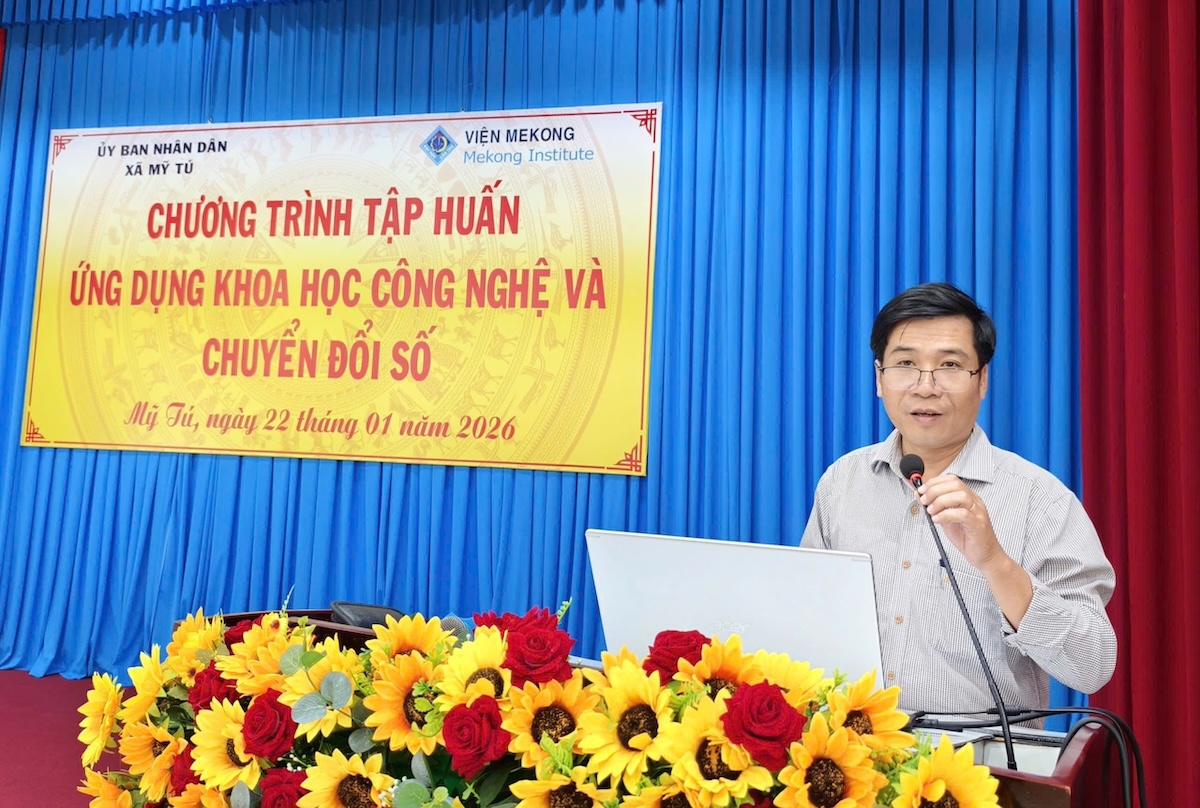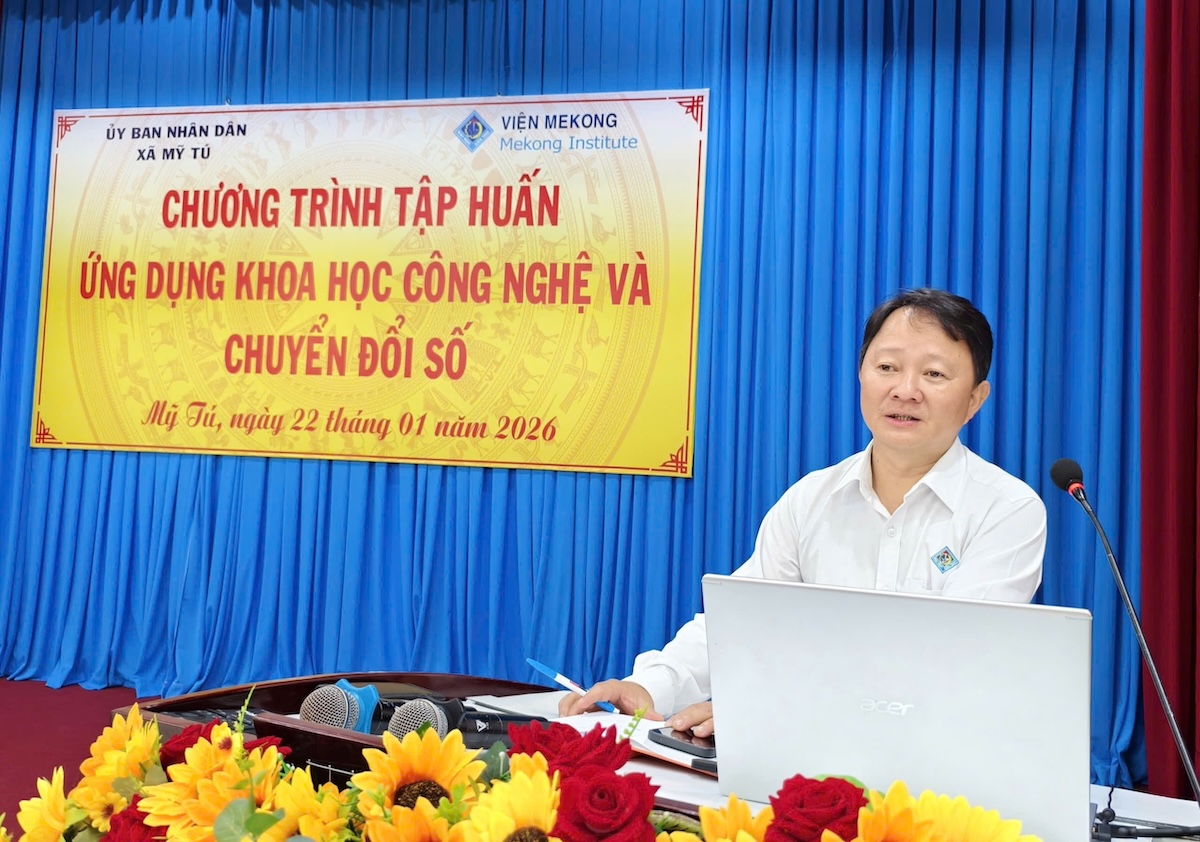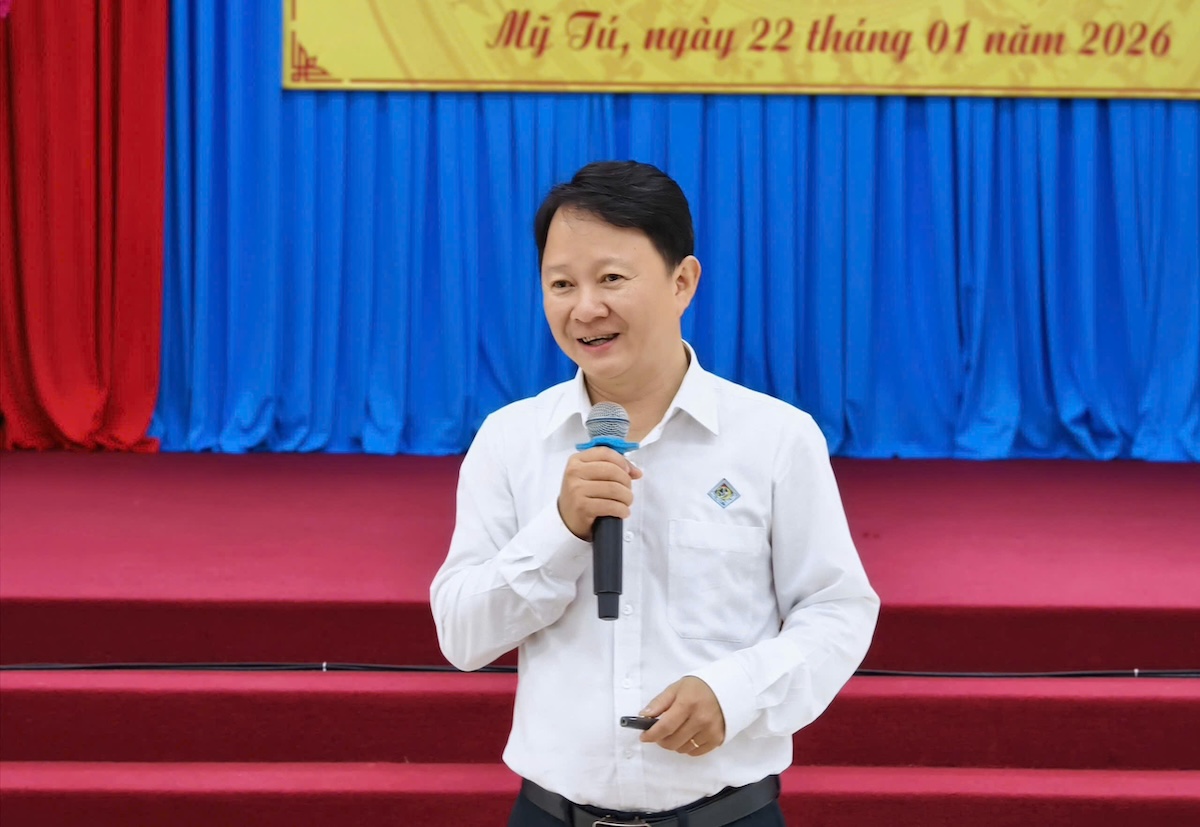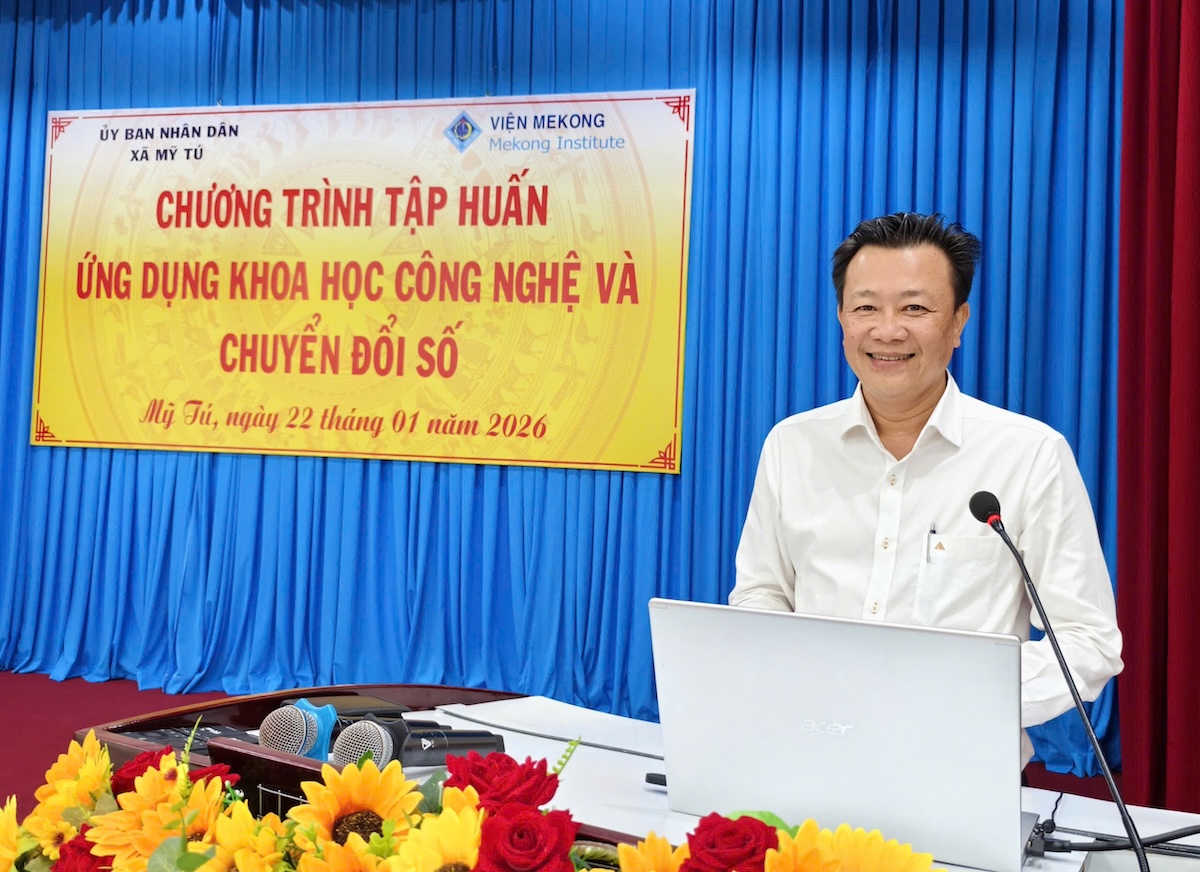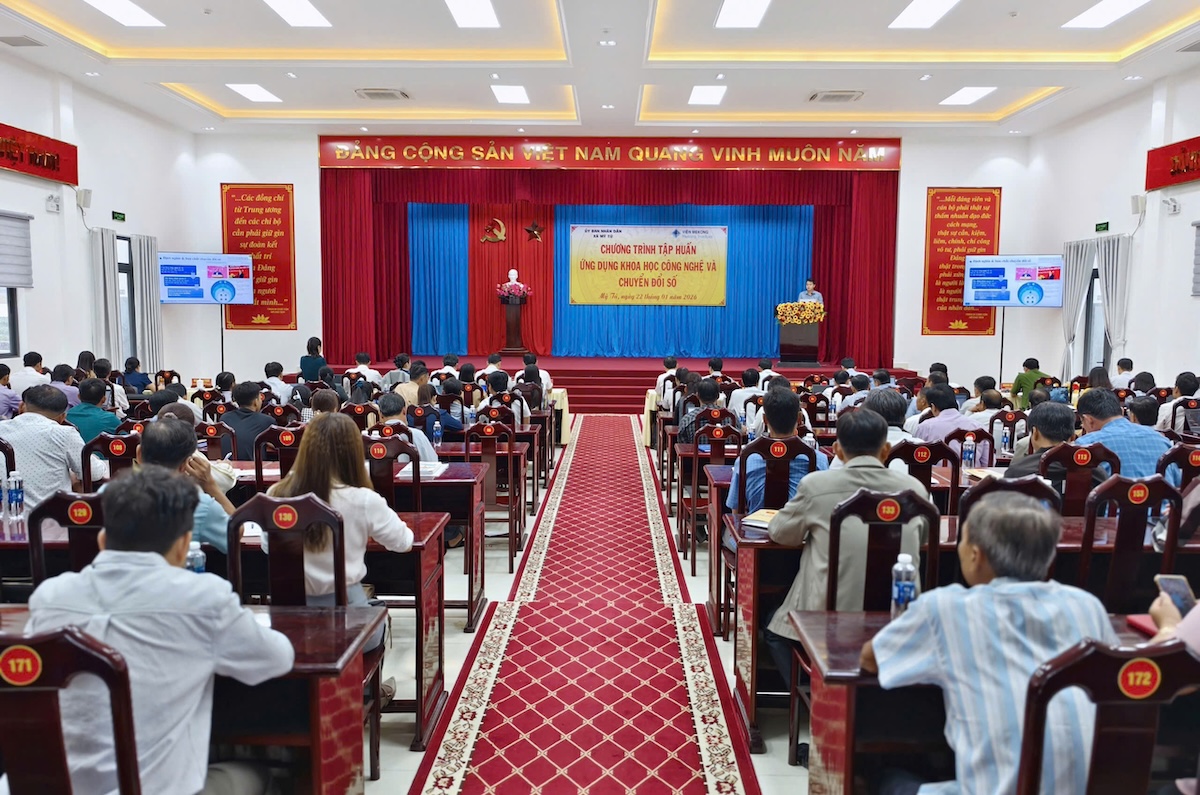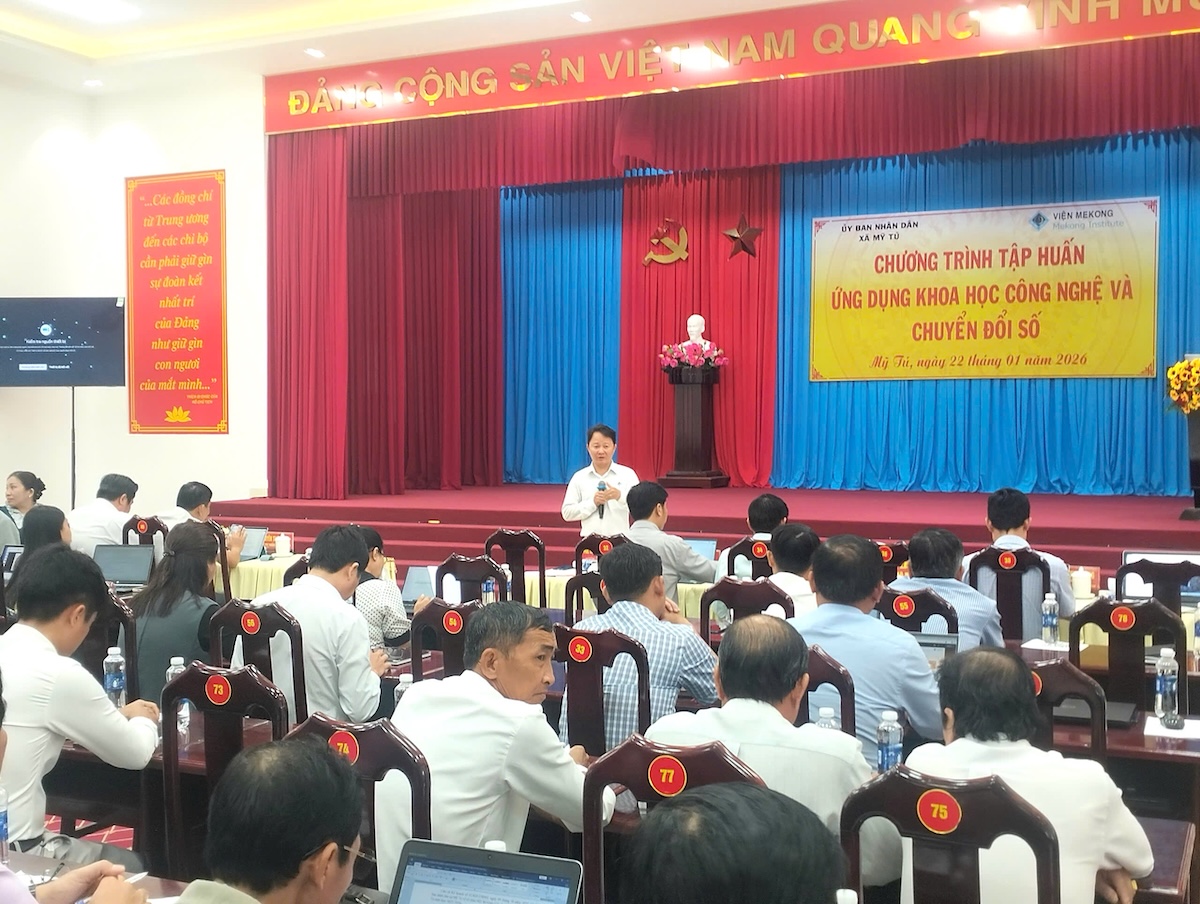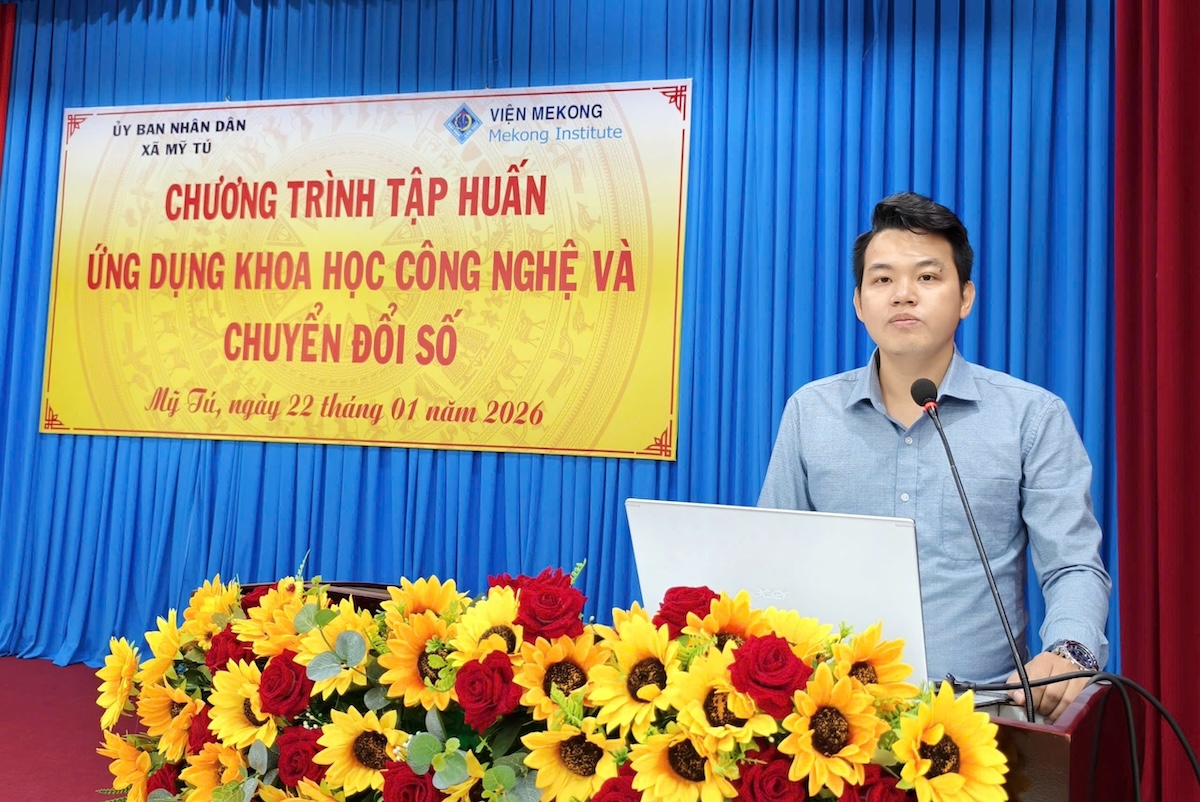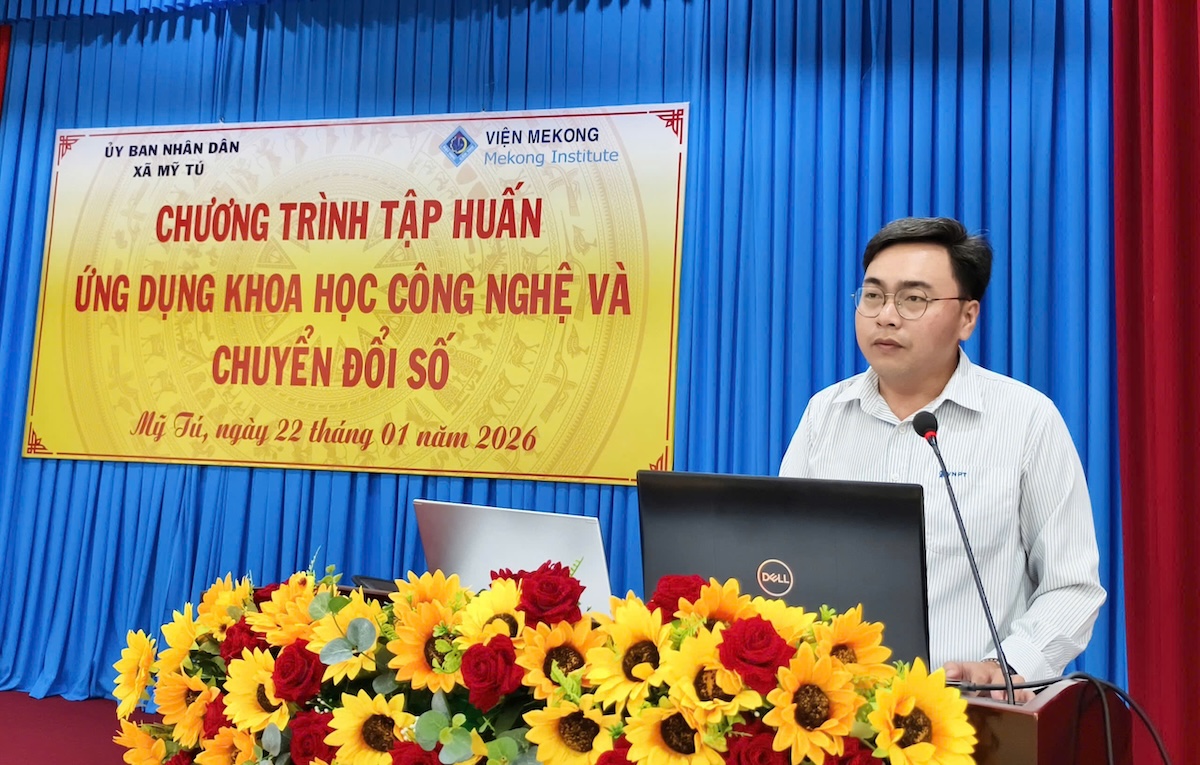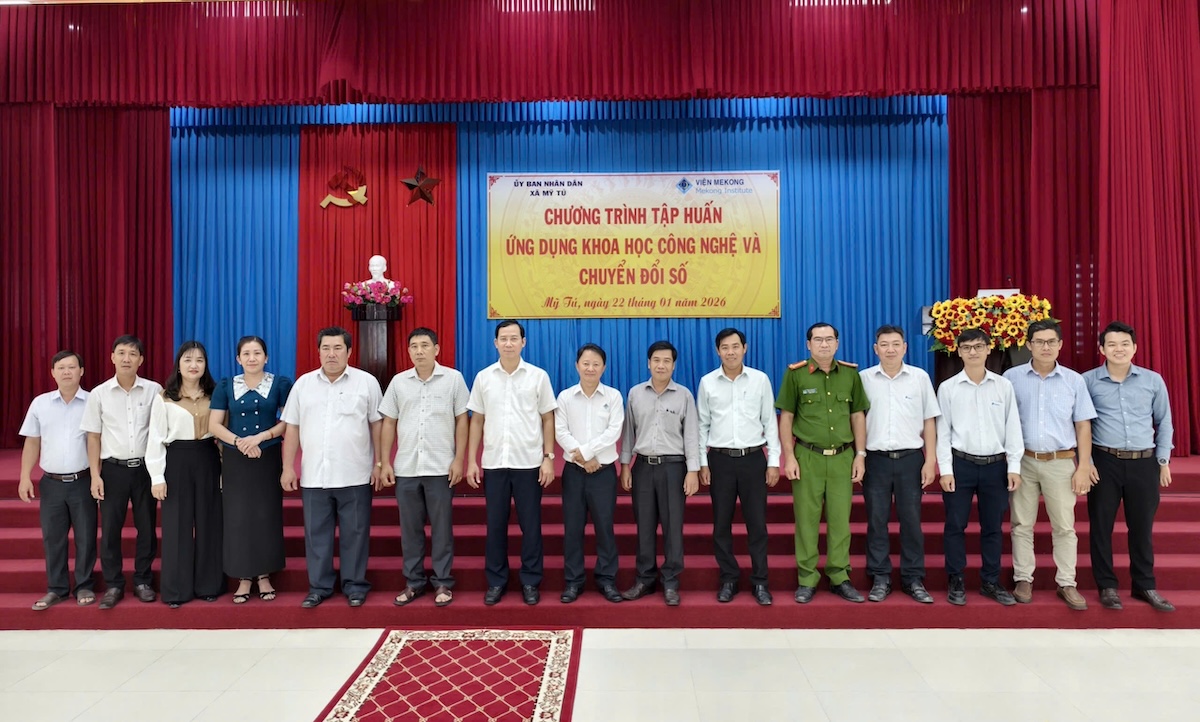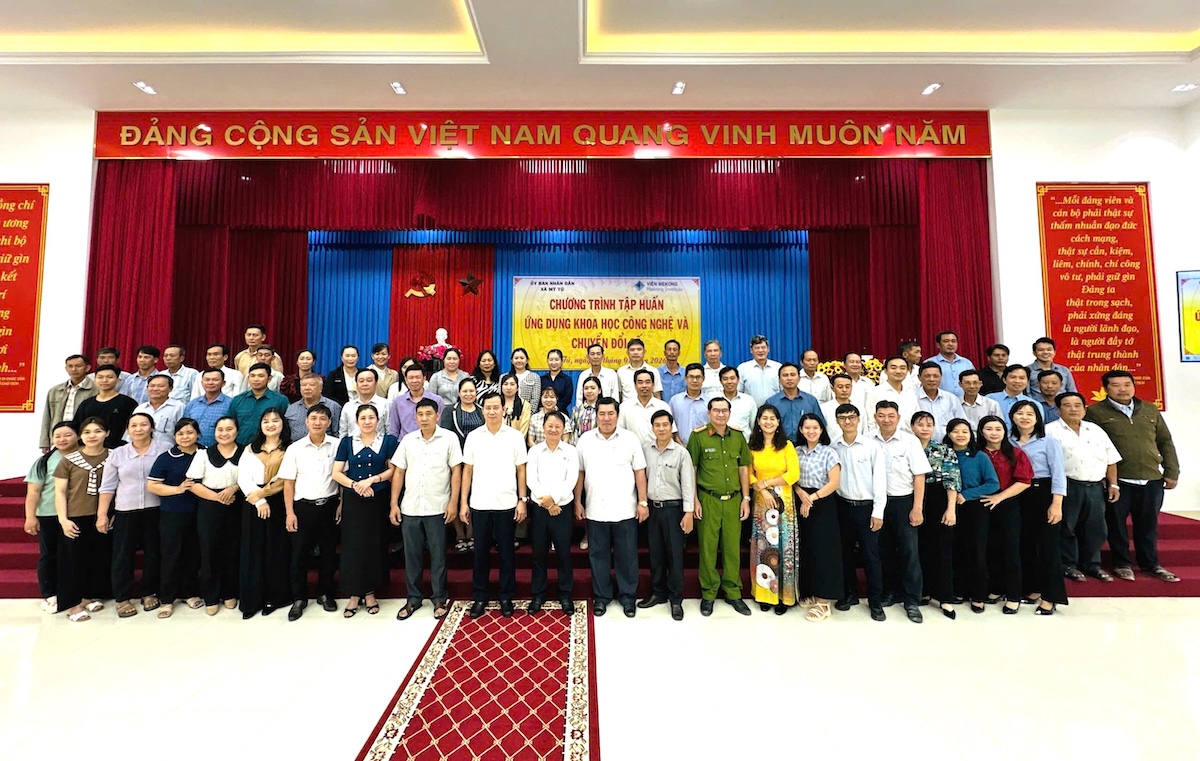
In the context where the application of science and technology (S&T) and digital transformation has become an inevitable requirement for grassroots-level state management, on January 22, 2026, the Mekong Institute, Can Tho University, in coordination with the Party Committee and the People’s Committee of My Tu Commune, Can Tho City, organized the “Training Program on the Application of Science and Technology and Digital Transformation” for local cadres, Party members, and civil servants of the commune.
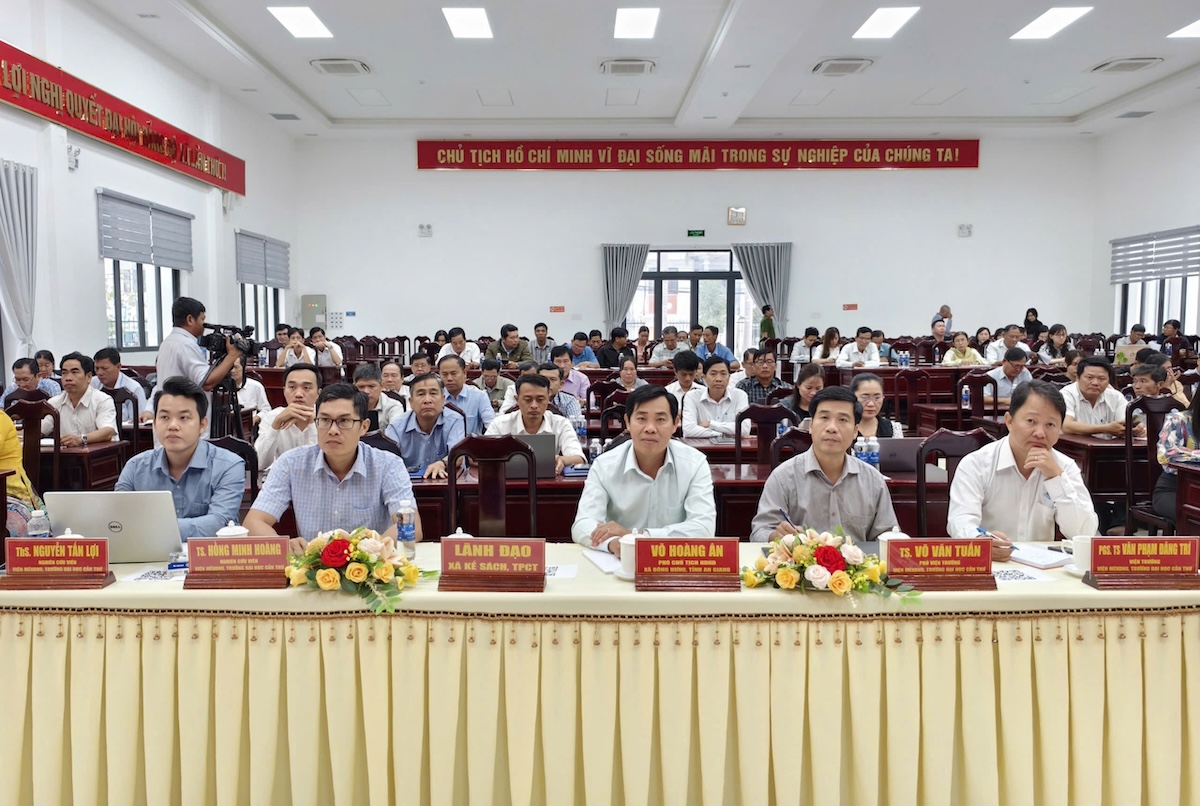
Attending the program were Mr. Pham Tuan – Member of the City Party Committee, Secretary of the Commune Party Committee, and Chairman of the People’s Council of My Tu Commune; Mr. Nguyen Thai Dang – Standing Deputy Secretary of the Commune Party Committee; Mr. Vo Minh Luan – Deputy Secretary of the Commune Party Committee and Chairman of the People’s Committee of My Tu Commune; Assoc. Prof. Dr. Van Pham Dang Tri – Director of the Mekong Institute; Dr. Vo Van Tuan – Deputy Director of the Mekong Institute; members of the Standing Committee and Executive Committee of the Commune Party Committee; lecturers and researchers from the Mekong Institute; representatives of VNPT Can Tho; along with leaders of local departments, mass organizations, schools, and officials, civil servants, and public employees in charge of digital transformation at the commune level.
In his opening remarks and program orientation, Assoc. Prof. Dr. Van Pham Dang Tri emphasized that the application of science and technology and digital transformation at the grassroots level is an urgent requirement at present. This process goes beyond the mere adoption of technology and entails a fundamental transformation in mindset, organizational structure, and operational mechanisms, with cadres and Party members playing a central role. Implementation must be closely aligned with local conditions to ensure feasibility, effectiveness, and sustainability.
The training content focused on analyzing the nature, role, and emerging trends of S&T application and digital transformation in commune-level state management, thereby clarifying the new requirements facing grassroots authorities. Based on this foundation, the program shared practical experiences and solution orientations for applying digital transformation in administrative reform, data management, and public service delivery, with the aim of enhancing governance effectiveness and improving the quality of services provided to citizens.
In addition to administrative management, the program also discussed the promotion of agricultural value chains through digital transformation and traceability, highlighting the role of digital transformation in strengthening production–consumption linkages, improving management efficiency, and increasing the added value of agricultural products. Through the sharing of practical examples and value chain management tools currently implemented by several organizations, the program supported the locality in identifying appropriate directions, roadmaps, and solutions aligned with existing resources. At the same time, the program introduced artificial intelligence (AI) tools as supportive solutions to enhance the effectiveness of state management and complement administrative reform efforts.
As a provider of technological solutions and a partner accompanying local authorities in digital transformation, representatives of VNPT Can Tho participated in the program by sharing experiences and insights on digital transformation solutions for administrative reform, online public services, document management, and data governance at the local level. They also analyzed challenges and obstacles encountered during implementation at the grassroots level and, based on this analysis, proposed solutions and future orientations to support local authorities in improving governance efficiency and service quality for citizens.
With a focus on practical implementation, the program organized discussions and worked toward the development of a digital transformation model tailored to My Tu Commune for the 2025–2026 period. This process helped identify implementation challenges, determine priority areas for future action, and clarify the accompanying and supporting roles of the Mekong Institute, Can Tho University, as well as the coordination with technology enterprises such as VNPT Can Tho.
The training program represents a concrete activity within the Mekong Institute’s strategic orientation to link research, training, and knowledge transfer with the practical needs of localities. It contributes to capacity building for grassroots cadres and promotes the digital transformation process in alignment with sustainable socio-economic development in the Mekong Delta.