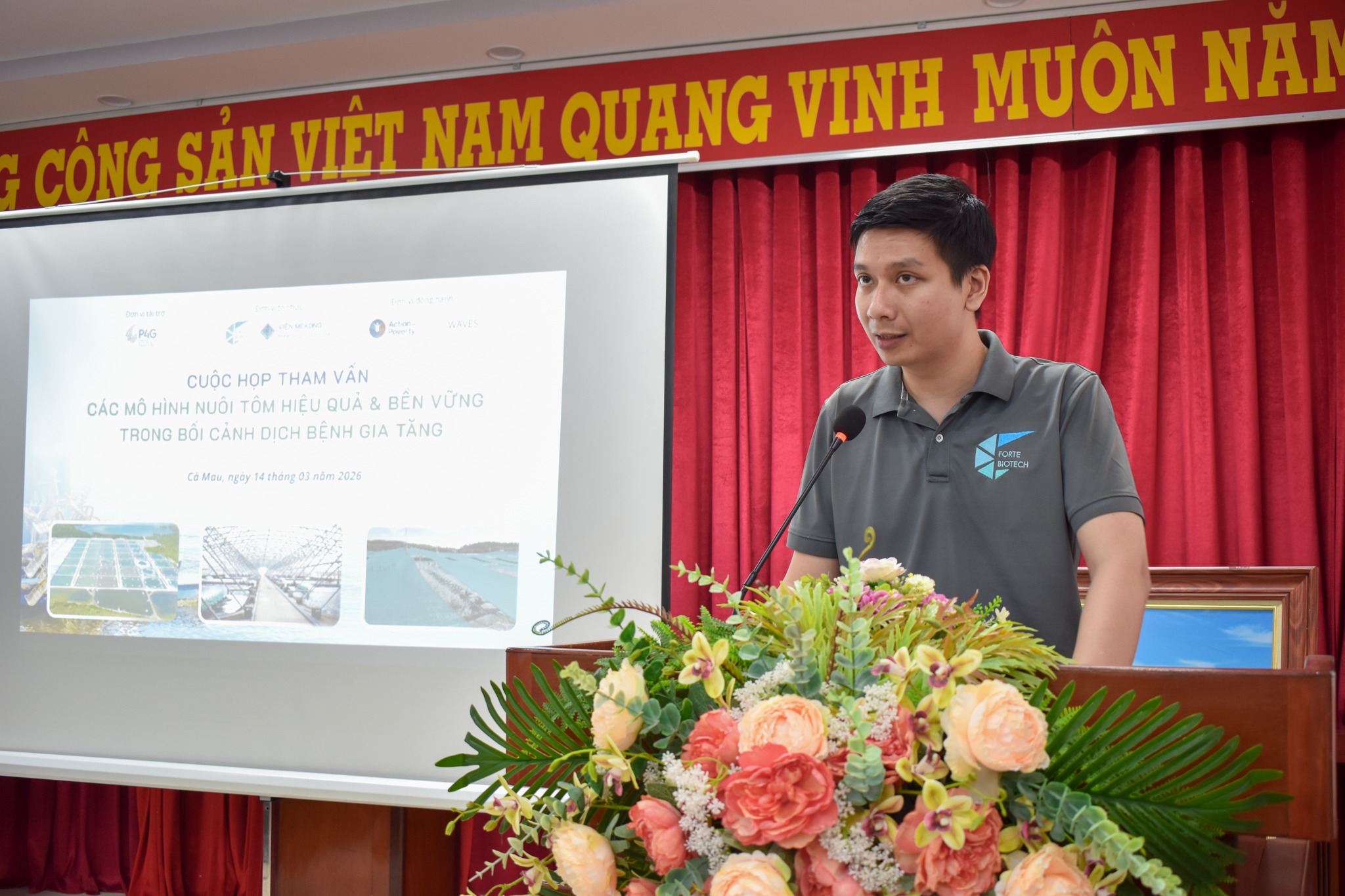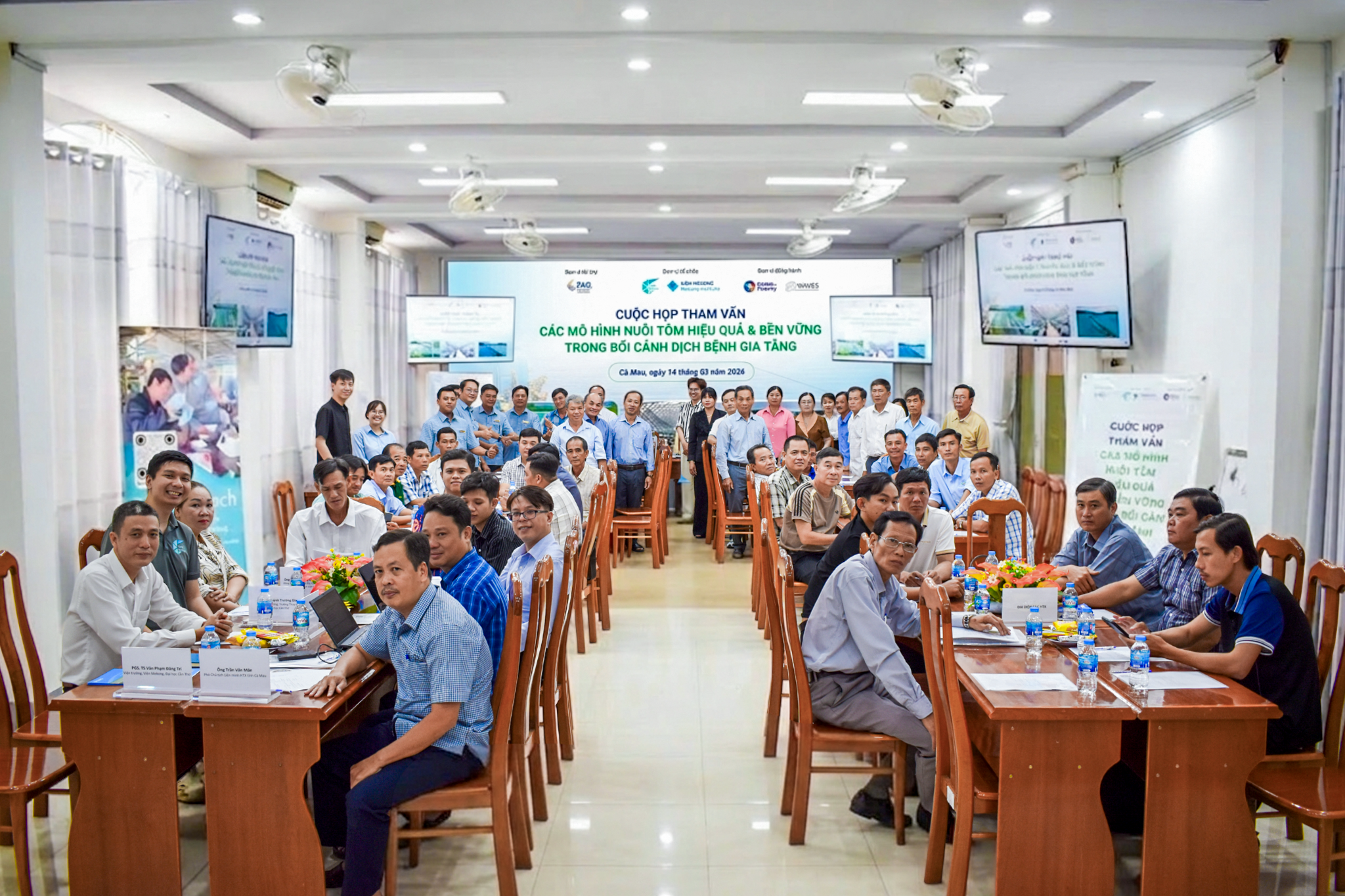
Ca Mau, March 14, 2026 – Within the framework of the project “Research Towards Environmental Sustainability in Shellfish Aquaculture (WAVES Project)”, the Mekong Institute at Can Tho University, in collaboration with Forte Biotech, organized a consultation workshop entitled “Effective and Sustainable Shrimp Farming Models in the Context of Increasing Disease Outbreaks in the Mekong Delta.”
The workshop aimed to promote a systematic approach to evaluating and selecting appropriate shrimp farming models by providing an overview of current production systems and assessing their effectiveness based on technical, economic, environmental, and risk management criteria. Through this process, the program seeks to support shrimp farmers in identifying models that best suit local conditions, while also creating a platform for discussing solutions to disease control and improving operational efficiency in shrimp farming systems. These efforts contribute to enhancing production performance and promoting the sustainable development of the shrimp industry.
The consultation workshop attracted the participation of more than 50 representatives from shrimp farming cooperatives, shrimp farmers, scientists, and aquaculture experts in Ca Mau province. Participants also included representatives from management agencies, organizations involved in the shrimp sector in the Mekong Delta, as well as researchers from the Mekong Institute at Can Tho University and partners of the WAVES project. The event provided an opportunity for stakeholders to exchange information, share experiences, and propose solutions for developing effective and sustainable shrimp farming models.
In their opening remarks, Mr. Tran Van Man, Vice Chairman of the Ca Mau Cooperative Alliance; Assoc. Prof. Dr. Van Pham Dang Tri, Director of the Mekong Institute at Can Tho University; and Mr. Nguyen Dang Quang Minh, Director of Forte Biotech, emphasized the importance of strengthening collaboration among government agencies, research institutions, businesses, and shrimp farmers in identifying effective solutions for disease control, improving productivity, and promoting the sustainable development of the shrimp industry in the Mekong Delta. They highlighted that the workshop serves as a platform for scientists, experts, enterprises, and cooperatives to exchange experiences and discuss shrimp farming models as well as technical and management solutions aimed at improving production efficiency and reducing disease risks.
During the program, Assoc. Prof. Dr. Huynh Truong Giang, Vice Rector of the College of Aquaculture and Fisheries at Can Tho University, presented a keynote on effective and sustainable shrimp farming models in the context of increasing disease outbreaks. The presentation highlighted the growing importance of aquaculture in ensuring food supply and supporting economic development. At the same time, he addressed current challenges facing the shrimp farming sector, particularly disease risks and the impacts of climate change. To address these issues, he proposed strengthening the application of science and technology, improving farming models, and enhancing pond environmental management to promote sustainable shrimp farming development.
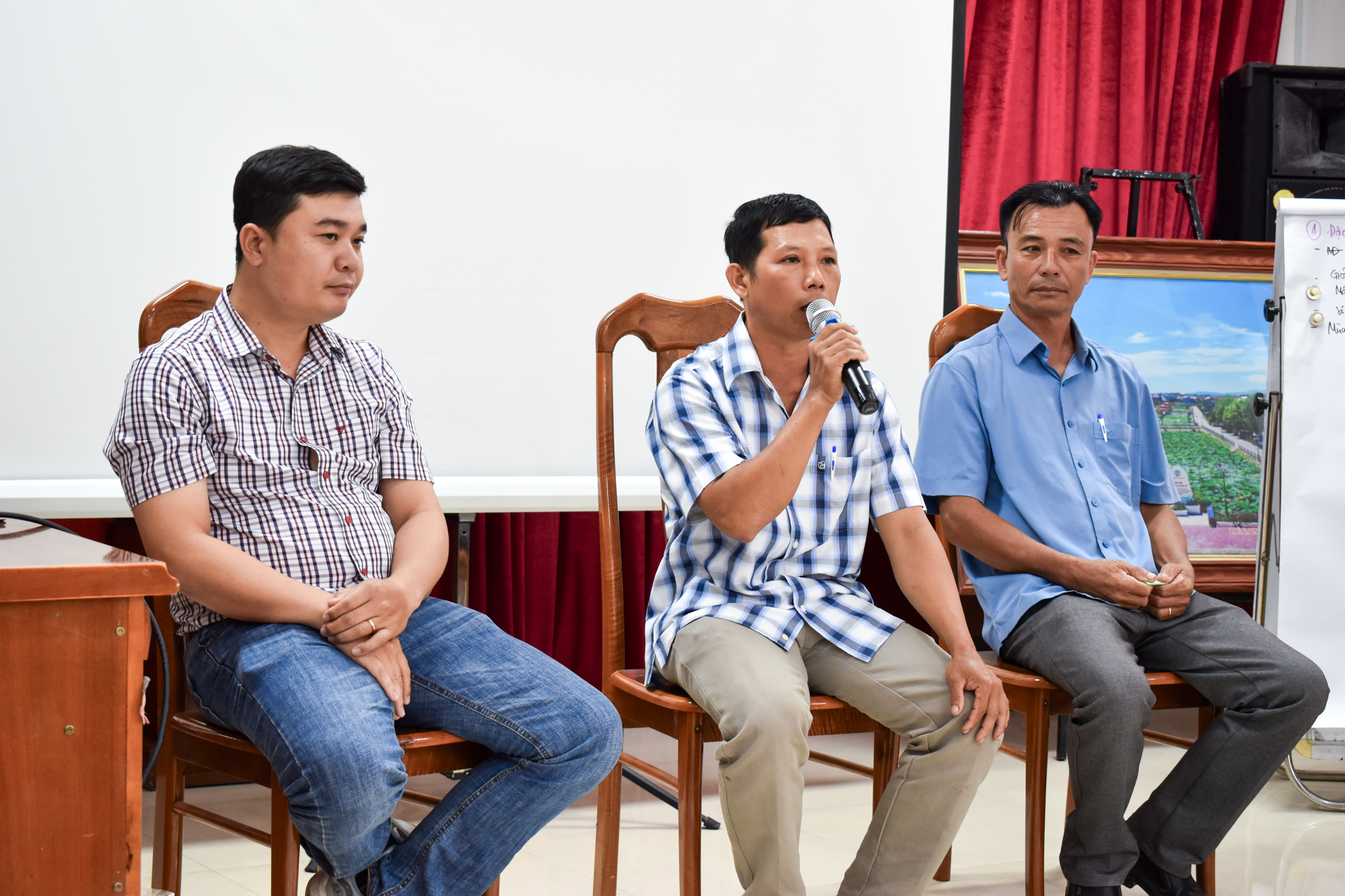
Following the expert presentation, the program continued with interactive discussions and group sessions involving shrimp farmers, cooperatives, and aquaculture enterprises. Participants were divided into three discussion groups corresponding to different farming models: super-intensive shrimp farming, intensive shrimp farming, and shrimp–rice or other integrated farming systems. During the discussions, participants shared practical experiences in pond management, disease control, technical operations, as well as the advantages and challenges associated with each farming model. Many discussions also focused on solutions to improve production efficiency, reduce disease risks, and strengthen linkages among farmers, cooperatives, and businesses.
The consultation workshop concluded with a range of valuable recommendations and insights from participants, particularly from shrimp farmers and local cooperatives. The practical experiences and perspectives shared during the event will serve as an important basis for further analysis and the development of technical solutions and strategic directions for shrimp farming models suitable for the conditions of the Mekong Delta.
Through this consultation activity, the program contributes to strengthening collaboration among scientists, businesses, cooperatives, and shrimp farmers, while promoting the application of science and technology in shrimp health management. Ultimately, these efforts aim to support the sustainable, efficient, and resilient development of the shrimp industry in the Mekong Delta.
#MekongInstitute #ForteBiotech #ShrimpDisease #Aquaculture #MekongDelta #CaMau
|
|