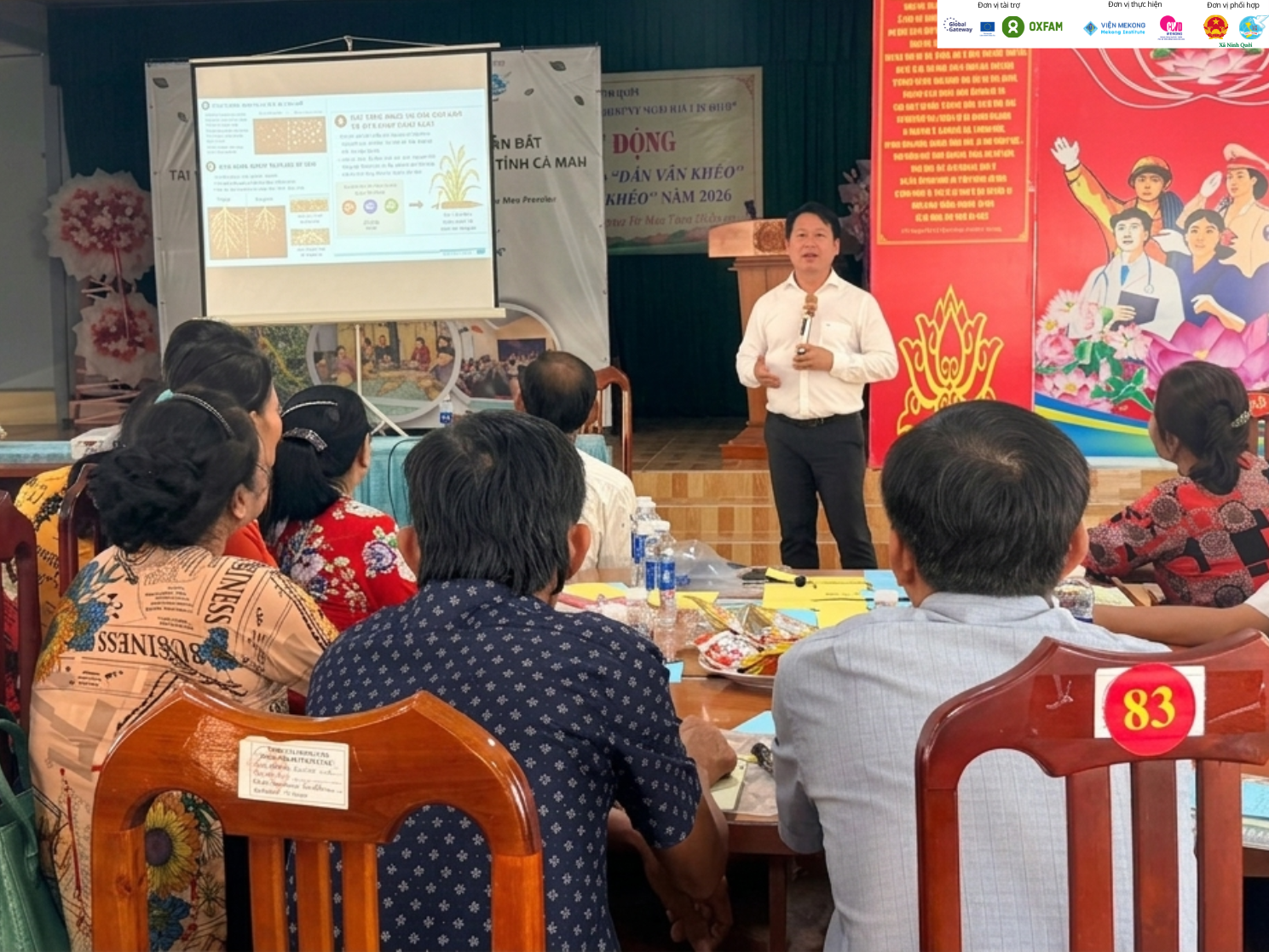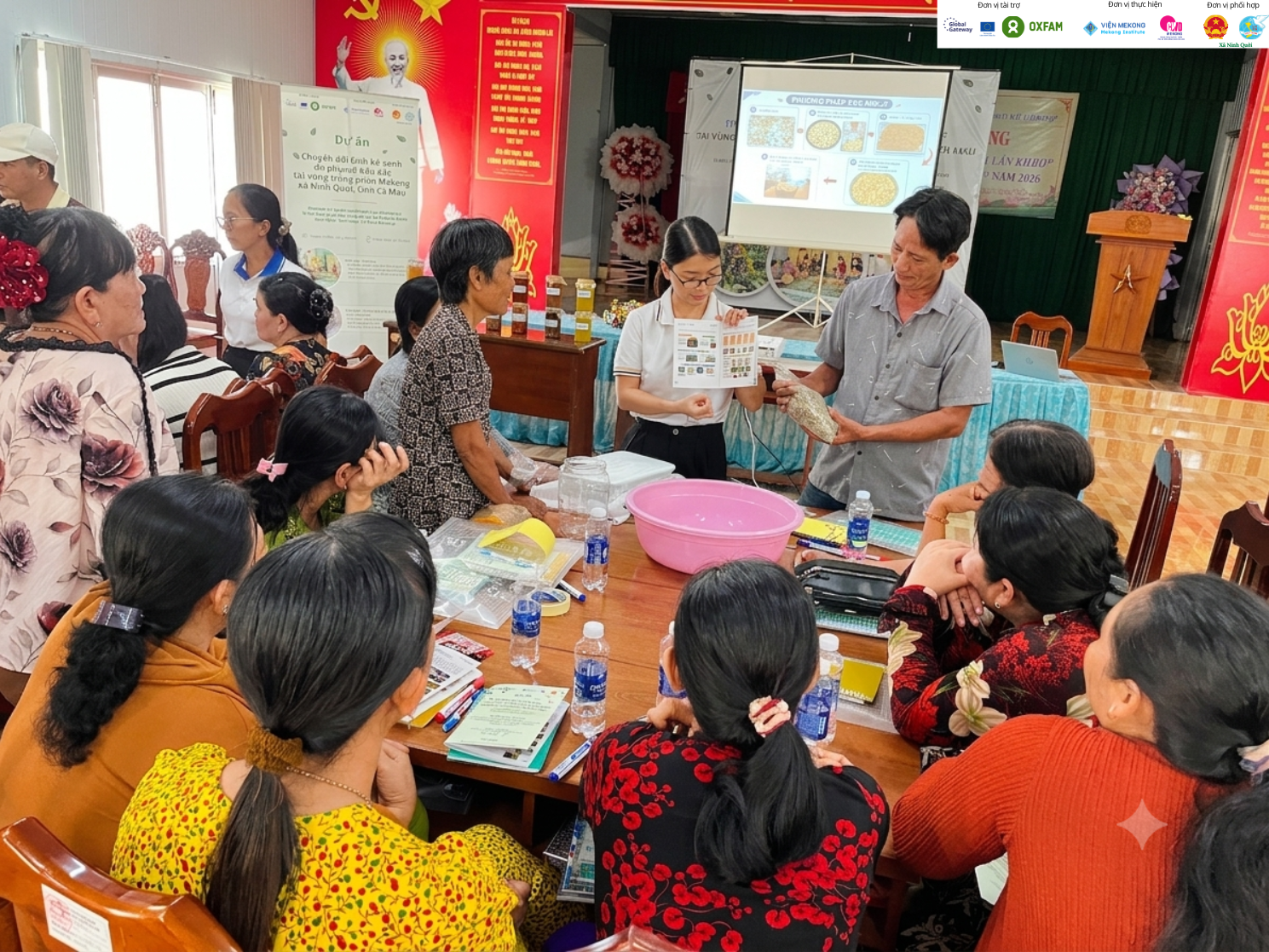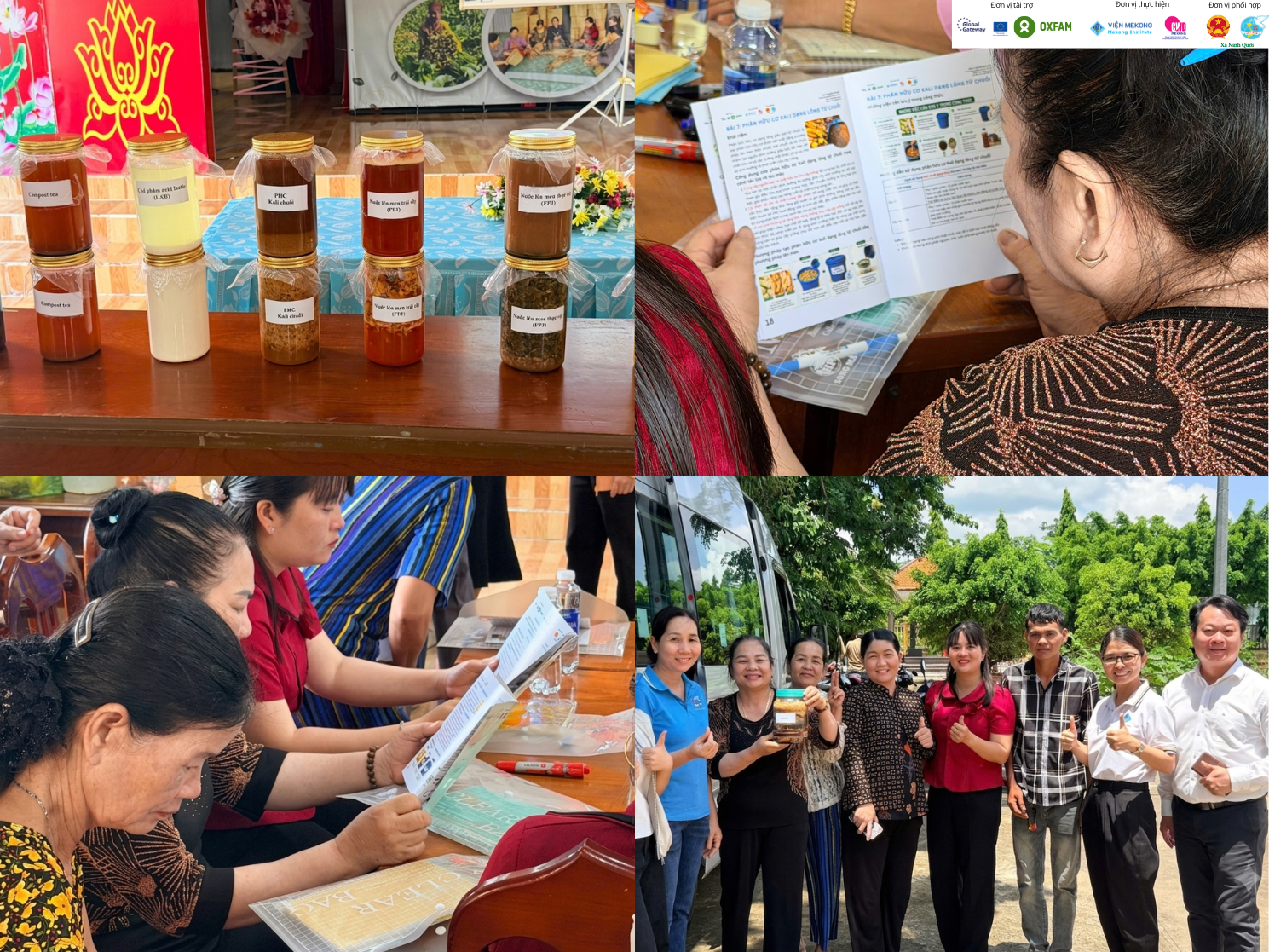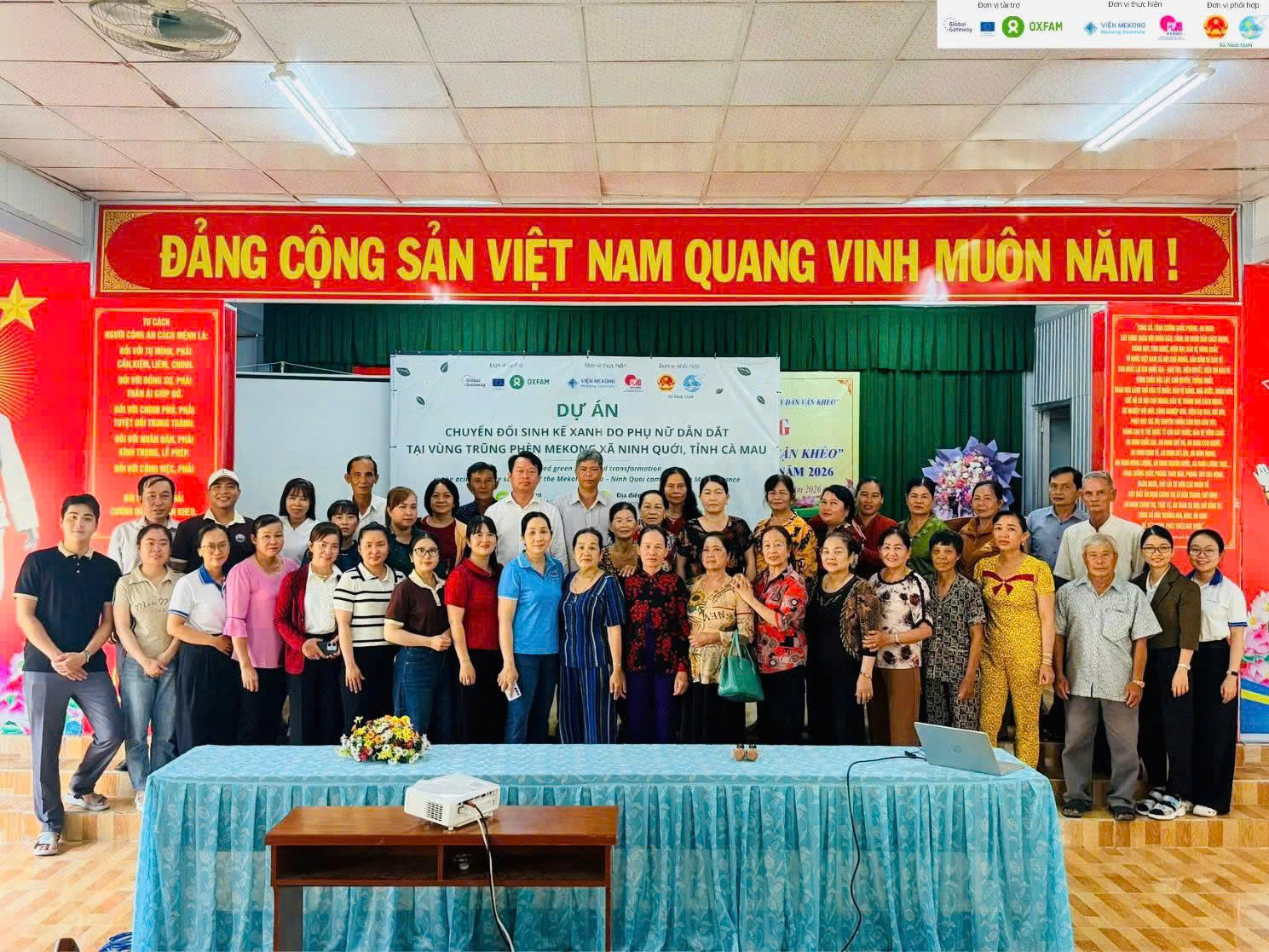
On July 18, 2026, the Mekong Institute - Can Tho University, in collaboration with the Mekong Delta Women's Development Center and the People's Committee of Ninh Quoi Commune, organized a training workshop titled “Microbiology and organic fertilizers in acid sulfate soil regions”. This is a key activity under the project "Women-led green livelihood transformation in the acid sulphate soil area of the Mekong Delta – Ninh Quoi commune, Ca Mau Province". The project is funded by the "Promoting Women-Led Green Transformation Initiatives" (PWG) project. The PWG project is a component of the "Women-Led Green Partnership Program," funded by the European Union and implemented by Oxfam in Vietnam.
The training program was directly led by Assoc. Prof. Dr. Nguyen Khoi Nghia, from the Department of Soil Science, College of Agriculture, Can Tho University and attracted over 30 delegates, including local households from the Ninh Quoi community, as well as officials from the Women's Union, Youth Union, Farmers' Union, and representatives of the Ninh Quoi People's Committee.
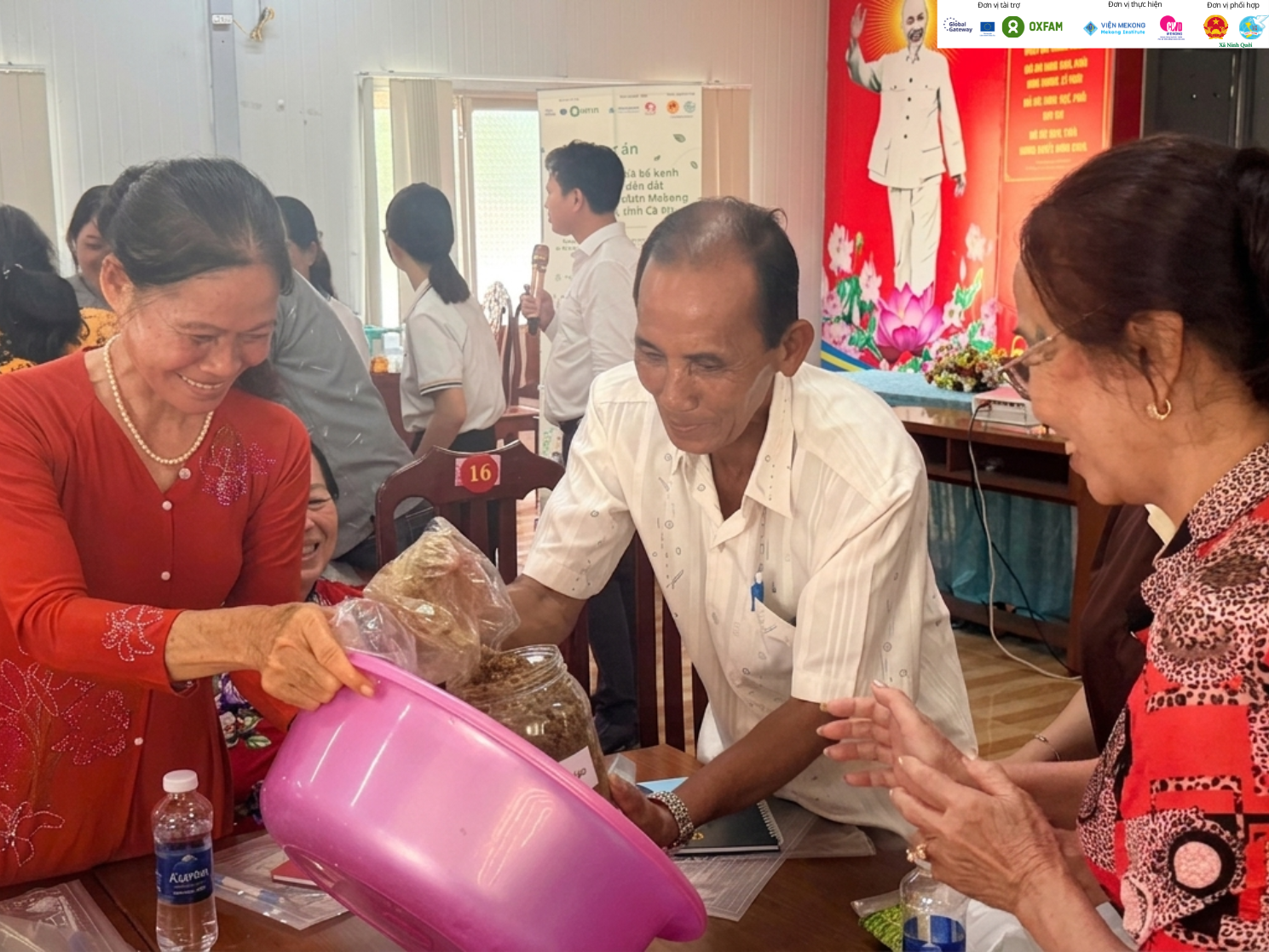
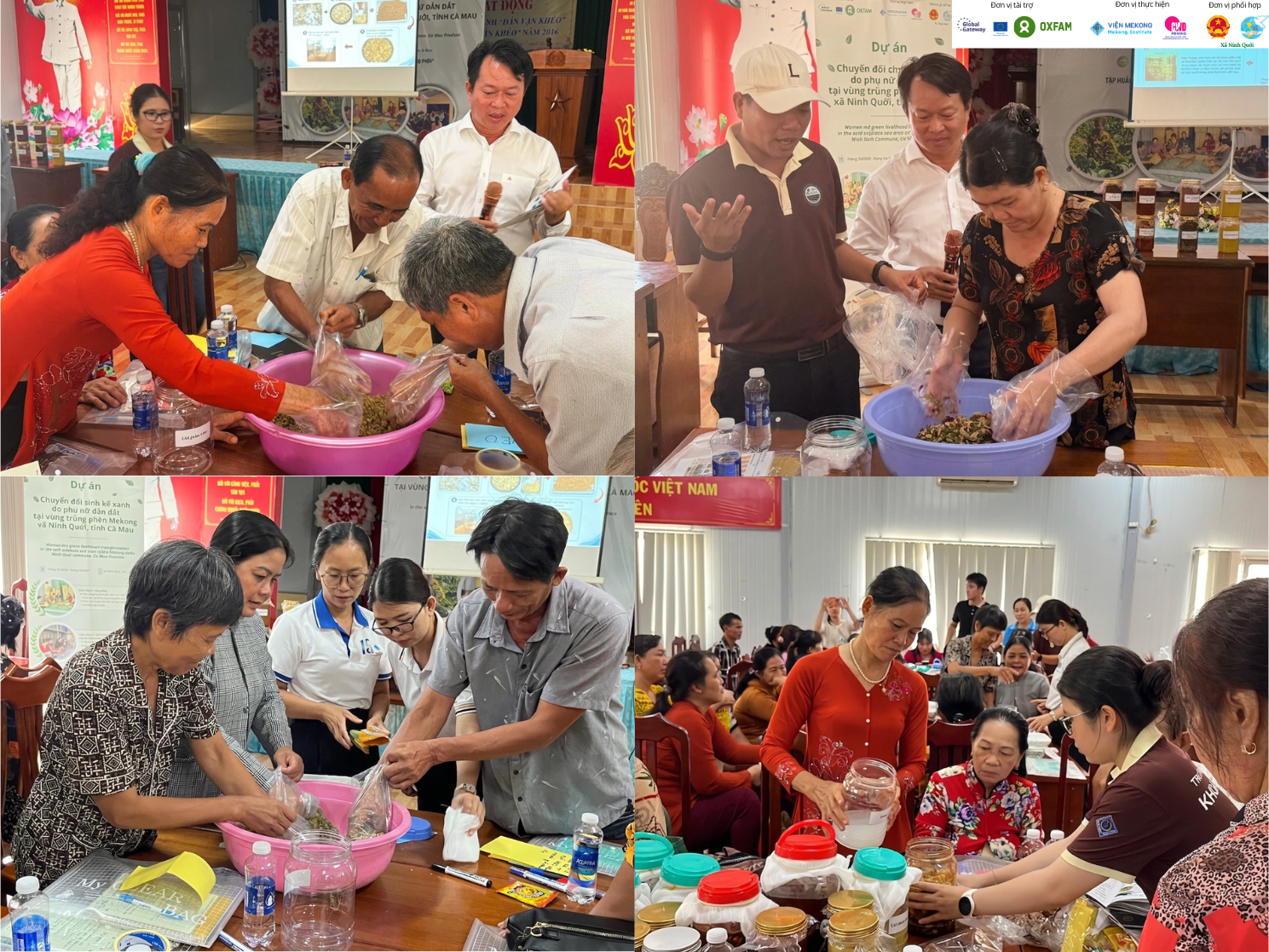
The content of this training session was specifically tailored for rice crops and vegetables grown on characteristic acid sulfate soils. During the workshop, Assoc. Prof. Dr. Nguyen Khoi Nghia provided direct theoretical guidance and hands-on instructions for the production of 08 types of microbial products optimized for rice and vegetables. These included: mass-rearing of Indigenous Microorganisms (IMO1–IMO4), production and application of Lactic Acid Bacteria (LAB), Fermented Plant Juice (FPJ), Fermented Fruit Juice (FFJ), Compost Tea, yeast solution (Saccharomyces spp.), liquid potassium organic fertilizer from bananas, and Fish Amino Acid (FAA) fertilizer. Many participants expressed great enthusiasm as they had their first opportunity to practice converting readily available agricultural by-products into fertilizers, thereby reducing input costs and enhancing self-sufficiency in farming.
However, besides the benefits, utilizing microbial products requires strict compliance with technical procedures and environmental conditions to achieve optimal efficiency. Therefore, the workshop placed a heavy emphasis on practical application, encouraging farmers to implement pilot models and closely monitor the use of microorganisms in production. To overcome these practical barriers, the project will establish working groups driven by key women members. A team of experts will work side-by-side with local farmers, providing on-site coaching right in the rice fields and vegetable gardens to promptly address technical difficulties. This dedicated support aims to give households the confidence to successfully navigate their transition toward sustainable green agriculture.
🌐 For more information:
- Website: http://europa.eu
- Facebook: https://www.facebook.com/EUandVietnam/
Hashtags: #EUfunded #PWG
|
|