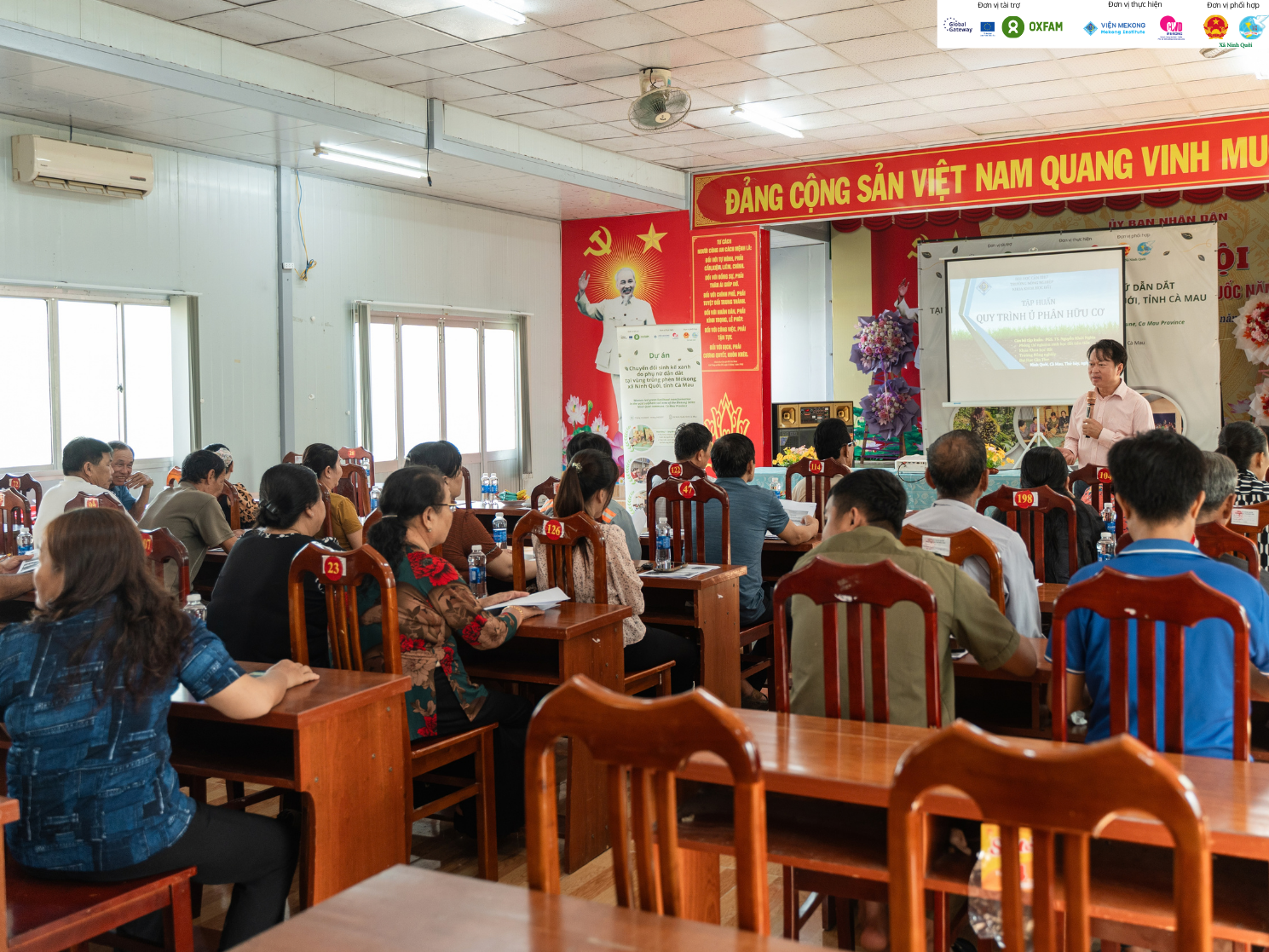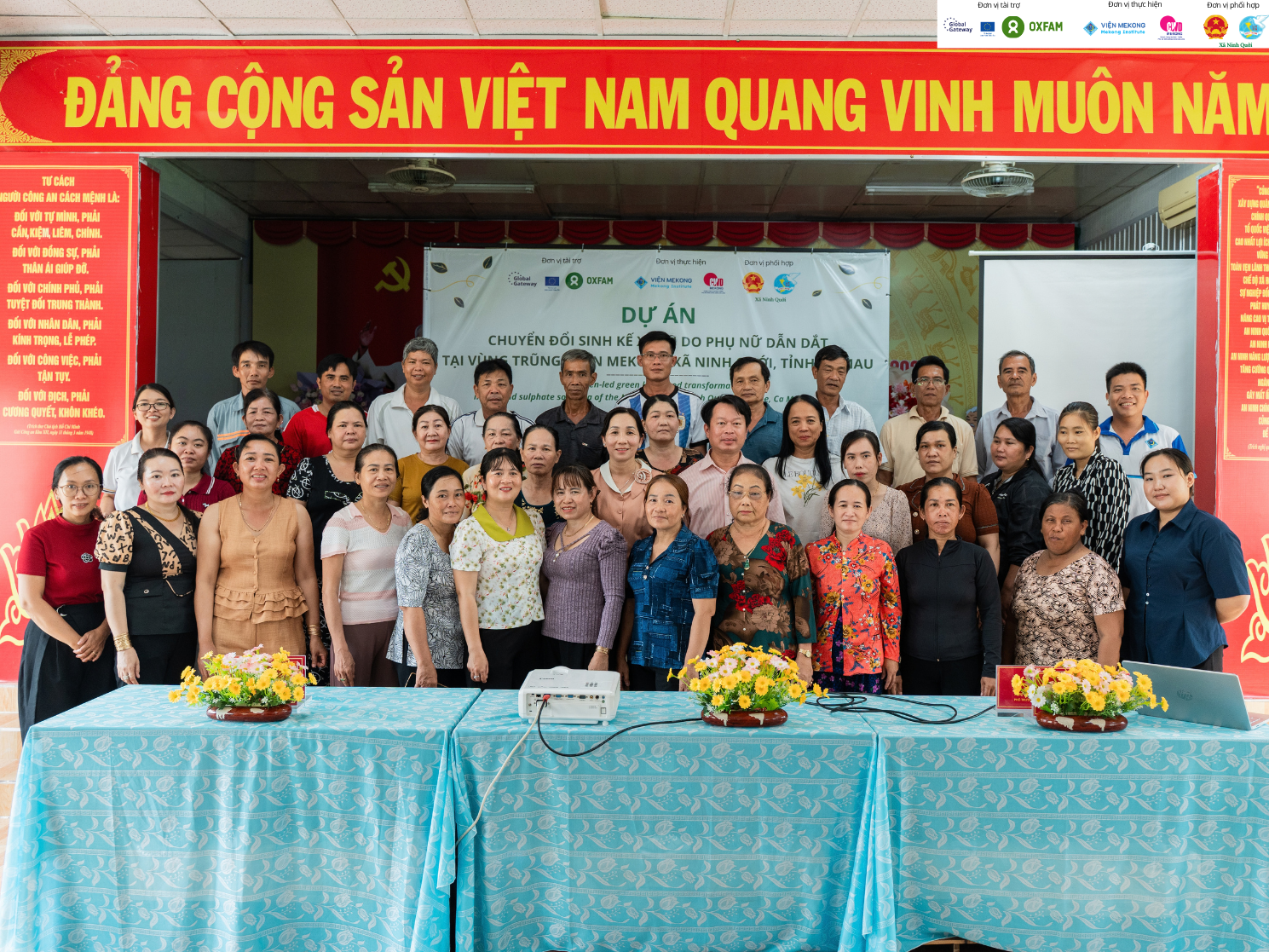
Improving rice farming efficiency, reducing emissions, and adapting to acid sulfate conditions were the key practical topics shared with women and farmers in Ninh Quoi Commune during the training program. The training was led by Assoc. Prof. Dr. Nguyen Khoi Nghia, Senior Lecturer at the Faculty of Soil Science, College of Agriculture, Can Tho University. The activities are part of the project “Women-led green livelihood transformation in the acid sulphate soil area of the Mekong Delta – Ninh Quoi commune, Ca Mau Province”. The project is funded by the “Promoting Women-Led Green Transformation Initiatives” (PWG) project. The PWG project is a component of the "Women-Led Green Partnership Program," funded by the European Union and implemented by Oxfam in Vietnam. The Mekong Institute of Can Tho University, in collaboration with the Mekong Delta Center for Women’s Development and the Ninh Quoi Commune People’s Committee, organized and implemented the training activities. The training brought together more than 30 participants, including local rice farmers, representatives of local mass organizations, and local authorities.
Learning practical techniques for the field
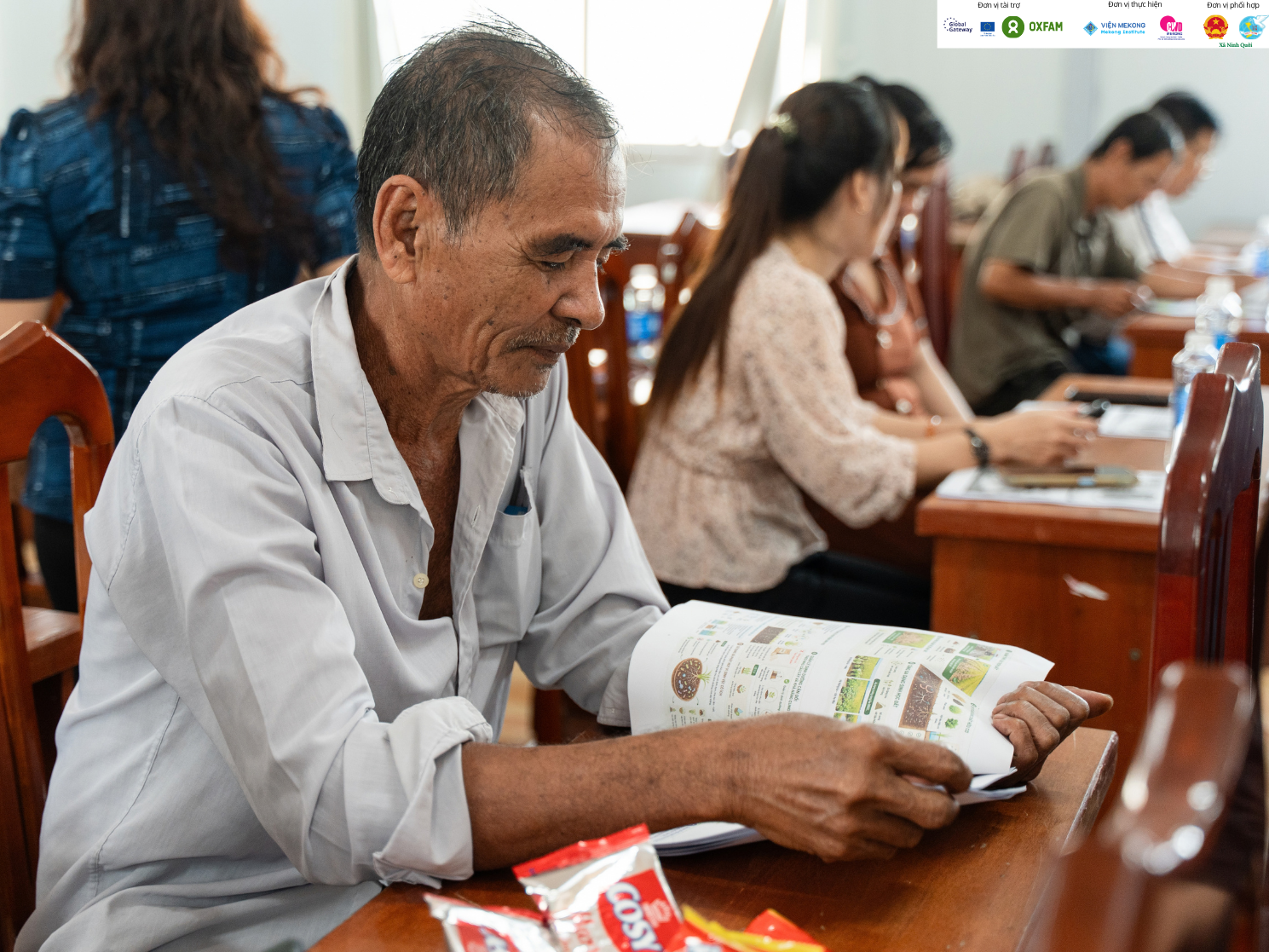
During the training, participants were introduced to rice farming techniques suited to local production conditions, including low-emission rice management and biological approaches to pest and disease control. Farmers also had the opportunity to discuss practical challenges in rice farming under acid sulfate conditions directly with the expert and explore ways to apply the techniques in their own production.
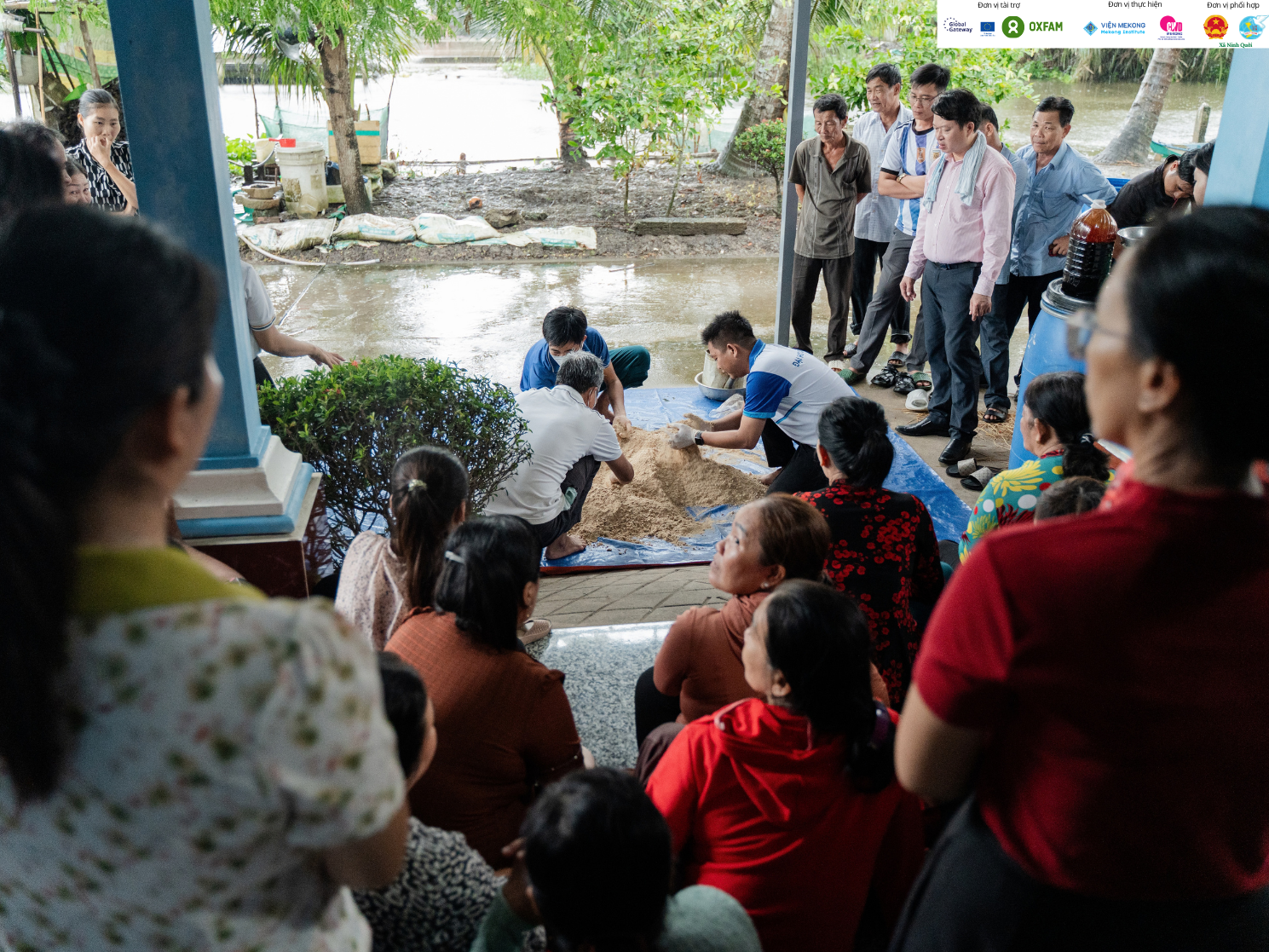
An important part of the program focused on making use of rice straw, agricultural by-products, and other organic materials for composting, with participants also practicing the composting process themselves. Organic fertilizer can help supply nutrients, improve soil fertility and structure, and enhance the soil’s water-holding capacity. The training aimed to help farming households produce and use organic fertilizer that is suitable for rice cultivation in acid sulfate areas.
From knowledge to practical changes
A key feature of the program was the combination of technical guidance, hands-on practice, and direct discussion with the expert. This approach helped participants not only understand the techniques but also identify practical solutions suited to their own farming conditions.
Through the training, farmers in Ninh Quoi Commune gained practical and easy-to-apply knowledge, from making use of agricultural by-products and using organic fertilizer to managing rice production in ways that reduce emissions and support adaptation to acid sulfate conditions.
#EUfunded #PWG
|
|